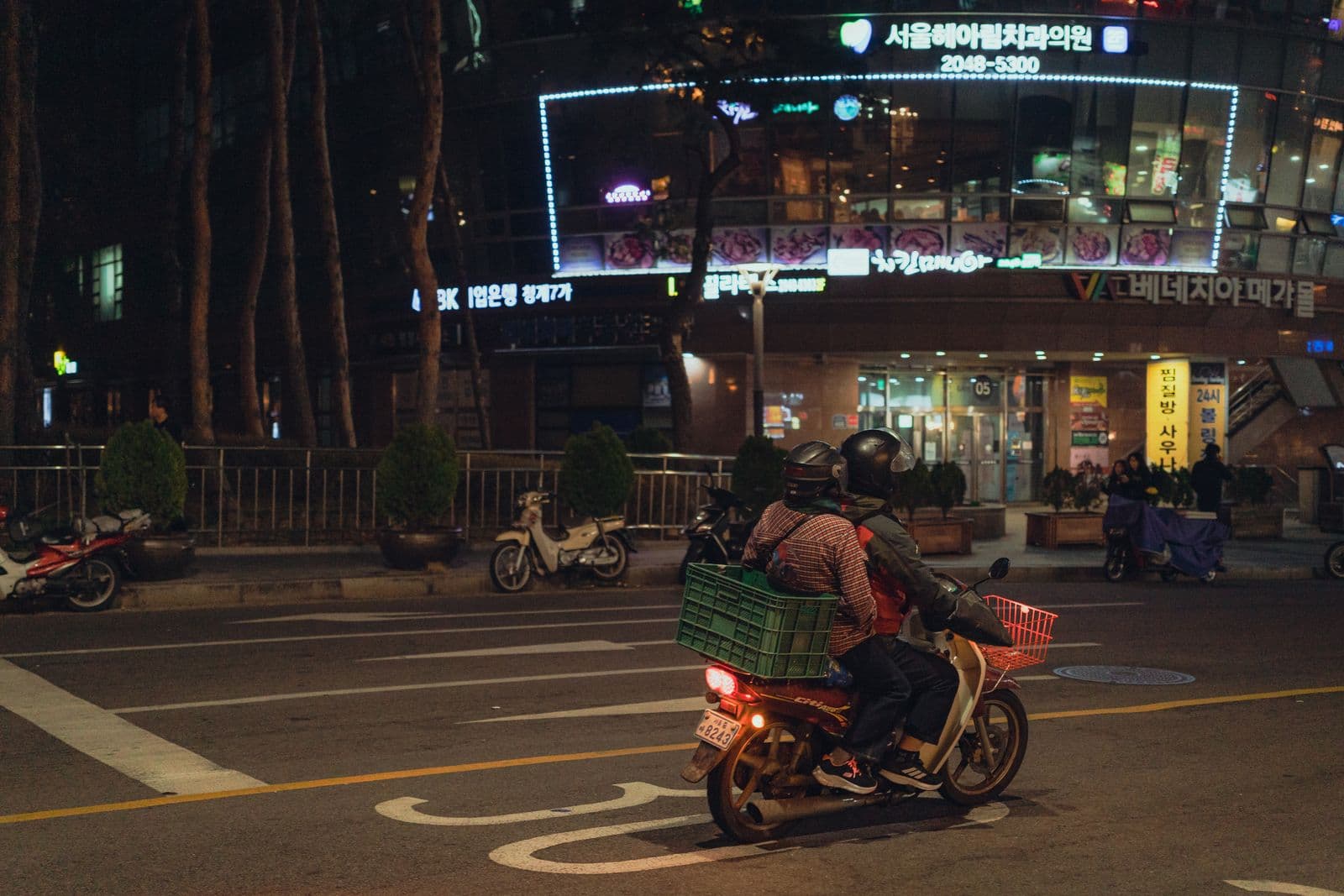
So your delivery app finally works. Your card goes through, your address is saved, and you've found a tteokbokki place that delivers late. Nice. But the first few orders in a new home tend to bring their own small problems. The rider can't get into your building. Someone calls you in fast Korean. Half the order is missing. Or you're looking at a pile of sauce-stained plastic with no idea which bin it goes in.
This guide starts where setup ends. If you haven't installed an app or sorted out payment yet, start with our earlier post on apps, payment, and addresses on the .. This post covers food delivery etiquette in Korea: the request notes, building access, troubleshooting, and cleanup that make delivery go smoothly in a Korean studio, officetel, or apartment.
The request box: your best tool when your Korean isn't fluent
Almost every Korean delivery app has a request field, called yocheongsahang (요청사항), at checkout. Many apps split it in two: one note for the restaurant (가게 요청사항) and one for the rider (배달 요청사항). Layouts change with app updates, so look for both boxes before you pay.
The restaurant note is about the food: less spicy, sauce on the side, that kind of thing. The rider note is about the handoff. Keep both short. Staff and riders read them on a busy screen in a hurry, so one clear sentence works better than a paragraph.
Here are some phrases you can copy and paste:
- 문 앞에 두고 벨 눌러주세요: "Please leave it at the door and ring the bell." Most people use this one.
- 문 앞에 두고 문자 주세요: "Leave it at the door and text me." Handy if you're on a call or your doorbell doesn't work.
- 벨 누르지 말고 노크해 주세요: "Please knock instead of ringing." Good if a roommate is asleep or your dog loses it at the bell.
- 경비실에 맡겨주세요: "Please leave it at the security office." Only use this if your building has one and the staff have agreed to hold deliveries.
- 한국어가 서툴러요. 문자로 연락 주세요: "My Korean isn't great. Please contact me by text." This one saves a lot of stress.
- 맵지 않게 해주세요: "Please make it not spicy." This goes in the restaurant note. Not every place can adjust, especially when the sauce is made ahead.
💡 Many apps also have preset buttons such as "leave at the door" or contactless delivery. Tap the preset, then add your own line underneath for anything specific.
Getting the rider through your building's front door
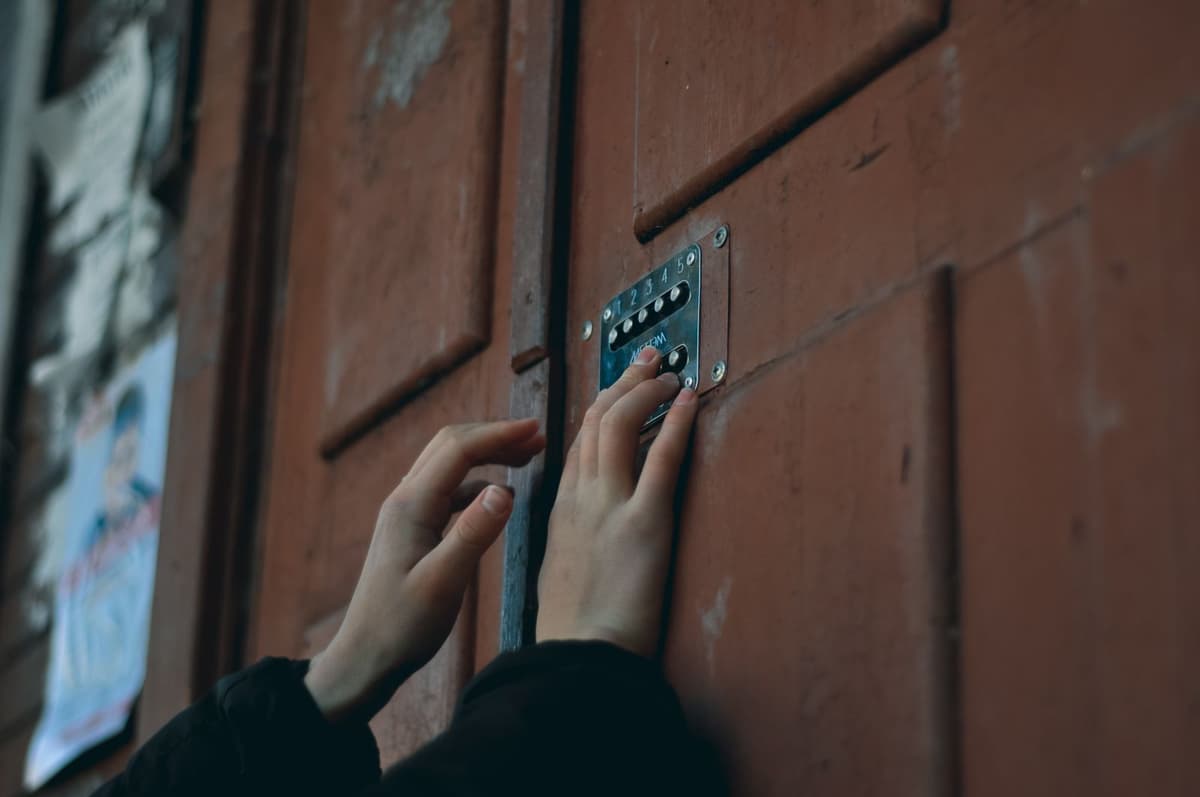
This is the top reason deliveries go wrong in a new place. Many Korean officetels and apartment complexes have a locked shared entrance, gongdong hyeongwan (공동현관), with a keypad. If the rider can't get in, they'll call you, usually in Korean, usually while standing outside as your food gets cold.
You have a few options:
- Add the entrance code to the rider note. Lots of residents write something like "공동현관 비밀번호 #1234" (that number is just an example). It's common, but think about it first: the restaurant and the rider can both see the code. Some buildings ask residents not to share it, so check your house rules or ask your landlord.
- Ask the rider to buzz you. Write "호출해 주세요" (please buzz me) and open the door from your unit's video intercom, called a wallpad (월패드), if your building has one. Try the intercom once after you move in so you know which button opens the entrance.
- Meet them downstairs. Write "1층 로비에서 받을게요" (I'll pick it up in the first-floor lobby) and keep an eye on the tracking map. If you're not sure about sharing codes, this is the easiest option.
- Leave it with security. In larger complexes with a guard office (경비실), some guards will hold food for a short time, but many won't. It isn't part of their job, so don't count on it.
📍 Officetels with a front desk or parcel room sometimes have their own rules about riders coming inside. If you're in a newer building, check the notice board (often near the elevator) or the residents' group chat if there is one.
Also check the unit details in your saved address. In a big apartment complex, a missing building number, or dong (동), sends riders to the wrong tower more often than you'd expect. 101동 and 102동 can be a long walk apart.
While you wait: tracking, calls, and texts
Once the restaurant accepts your order, most apps show its status: accepted, cooking, picked up, arriving. Many also show the rider on a live map. Use it. You can head down to the lobby at the right moment instead of waiting at the door.
Riders and restaurants do sometimes call, often through a masked number called ansim beonho (안심번호) so neither side sees the other's real number. If an unfamiliar Korean number calls within an hour of your order, it's probably about your food. A few things to know:
- Pick up anyway. A simple "네, 문 앞에 두세요" (Yes, leave it at the door) or "1층으로 내려갈게요" (I'll come down to the first floor) covers most calls.
- If you miss the call, check your messages. Riders often send a short text or app notification such as "문 앞에 두고 갑니다" (leaving it at the door).
- Turn your ringer on around delivery time. It sounds obvious, but a silent phone is the most common reason food ends up sitting outside.
💡 If the restaurant calls before cooking, it's often because something is sold out. A translation app with conversation mode can help. Or just say "죄송해요, 한국어 잘 못해요. 문자 주세요" (Sorry, I don't speak Korean well. Please text me).
When your order arrives wrong, late, or missing
It happens: a missing drink, the wrong spice level, a crushed container. Try not to call the restaurant in a panic. Going through the app is usually calmer and works better.
- Take photos right away. Before you eat, photograph the bag, the receipt sticker, and the problem. Apps usually ask for photos when you report an issue.
- Use in-app help or chat. Open your order history and look for customer service (고객센터) or a "problem with my order" option. Many apps offer text chat, which is much easier than a phone call in a second language.
- Keep it simple. For example, "음료가 안 왔어요" (The drink didn't come) or "주문한 메뉴와 달라요" (This isn't what I ordered). Translators handle short sentences well.
- See how they fix it. Depending on the app and the problem, you might get a partial refund, a coupon, or a redelivery. Policies vary between apps and change over time, so don't expect any specific result.
The app's arrival time is only an estimate. Rain, snow, and the dinner rush (roughly 6 to 8 pm) can push it back a lot. If an order is very late and the rider's dot isn't moving, in-app chat is still the best first step.
💡 Ordering during a heavy downpour or the first snow? Expect delays, and sometimes higher delivery fees, because fewer riders are out. Ordering a bit earlier than usual helps.
Delivery manners: fees, tips, reviews, and cutlery
- You don't need to tip. Korea doesn't have a tipping culture. The fee in the app is called baedal tip (배달팁), but despite the name it's a fixed delivery charge, not a gratuity. You don't need to hand the rider cash.
- Watch for minimum orders. Many restaurants set a minimum order amount (최소주문금액). If a place had a minimum of, say, ₩15,000 (about $10.50), one meal on its own might not reach it. Look for single-portion "1인분" menus, or add a side you'll actually eat tomorrow.
- Review events. Restaurant pages often advertise a "리뷰 이벤트" (review event): promise a review and get a free side, like a drink or fried dumplings. If you sign up, write the review. Small restaurants take ratings seriously, so if something went wrong, a fair and specific review is kinder than one star with no explanation.
- Skip the disposable cutlery. Most apps have a checkbox for not receiving disposable spoons and chopsticks (일회용 수저·포크 안 받기). If you have your own at home, tick it. That's less trash to sort later.
- Be friendly at the door. A quick "감사합니다" (thank you) is appreciated. Riders are on tight schedules, so if you're meeting them downstairs, be there when they arrive.
The cleanup: food waste, plastics, and containers
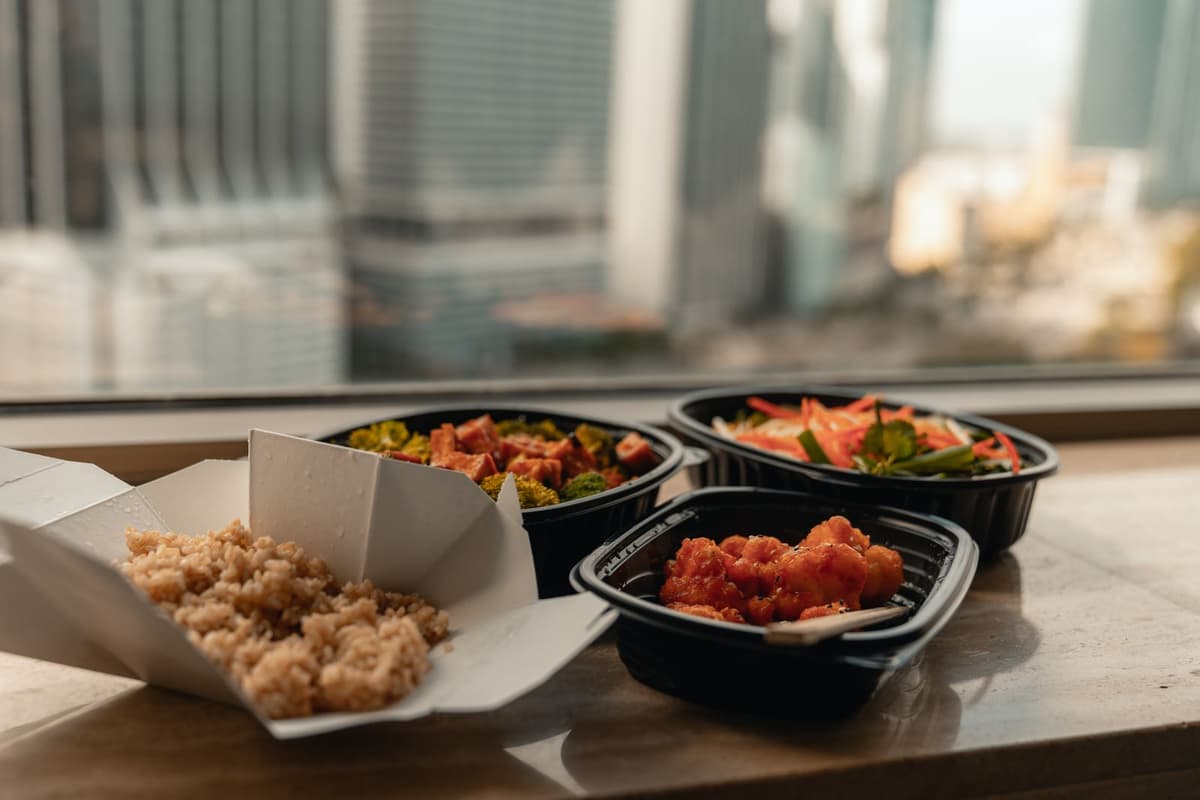
Here's the part nobody warns you about. Korean delivery comes with a lot of packaging (plastic tubs, foil, sauce cups, bags), and Korea takes trash separation seriously. Get it wrong and you might find a note from the building manager on your door, or in some cases a fine from your district.
The exact rules depend on your district, or gu (구), and your building. Treat this as a general guide and confirm the details locally:
- Food waste (음식물 쓰레기). Leftovers usually go into designated food waste bags or your building's food waste bin. Some bins open with a card or RFID tag. Drain soups and liquids first.
- Things that aren't food waste. Chicken bones, shellfish shells, fruit pits, and tea bags usually go in general trash, not food waste. A lot of newcomers get this wrong after their first fried chicken night.
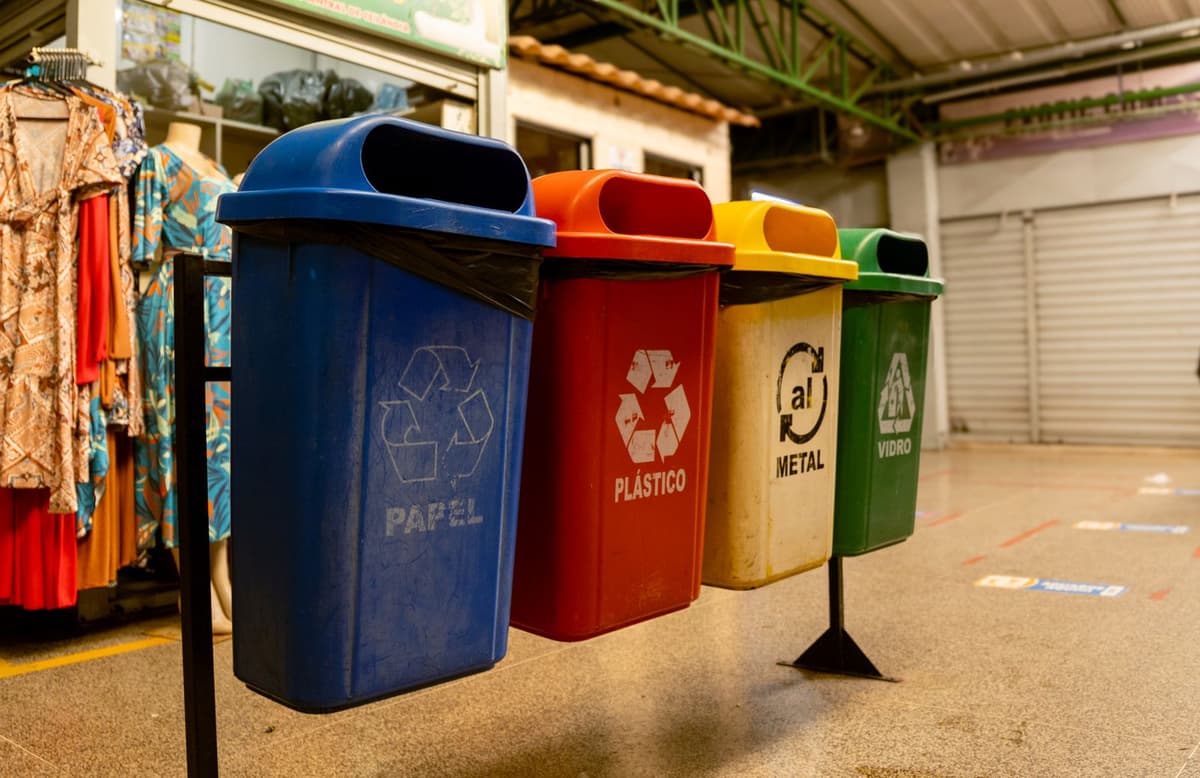
- Plastic containers. Rinse off sauce and oil, then put them in plastic recycling. If a container is badly stained and won't come clean, many districts say it goes in general trash instead.
- Plastic bags and wrap. Clean plastic bags and film usually have their own recycling category, called bi-nil (비닐).
- Paper and cardboard. Pizza boxes go into paper recycling only if they aren't soaked in grease. Otherwise, tear off the greasy part.
- General trash. Whatever's left goes into your district's official trash bags, jongnyangje bongtu (종량제 봉투), which you can buy at convenience stores and supermarkets.
💡 Rinse containers the same night. In a warm studio, leftover sauce starts to smell fast, especially in summer, and dried gochujang is much harder to scrub off the next day.
📍 Your building's recycling area and collection days are often posted near the entrance or in the trash room. If you can't find them, ask your landlord or building manager. People ask this all the time.
Make your home delivery-friendly
A few quick steps when you move in will make every order after that easier:
- Save your address carefully. Include the building number (동), the unit number (호), and the building name riders will see on the outside.
- Learn your intercom. Find out how to open the shared entrance from inside your unit.
- Buy trash bags on day one. Get food waste bags and general trash bags for your district so you're ready after your first order.
- Keep a phrase note. Save your favorite request phrases in a phone note so you can paste them in seconds.
If you're still choosing a place, ask about the entrance system and the trash area when you view it. You can browse foreigner-friendly studios, officetels, and shared houses by neighborhood on the in Korea map.
Looking for a place your dinner can actually find? Find a home on Homes in Korea and start ordering like a local.