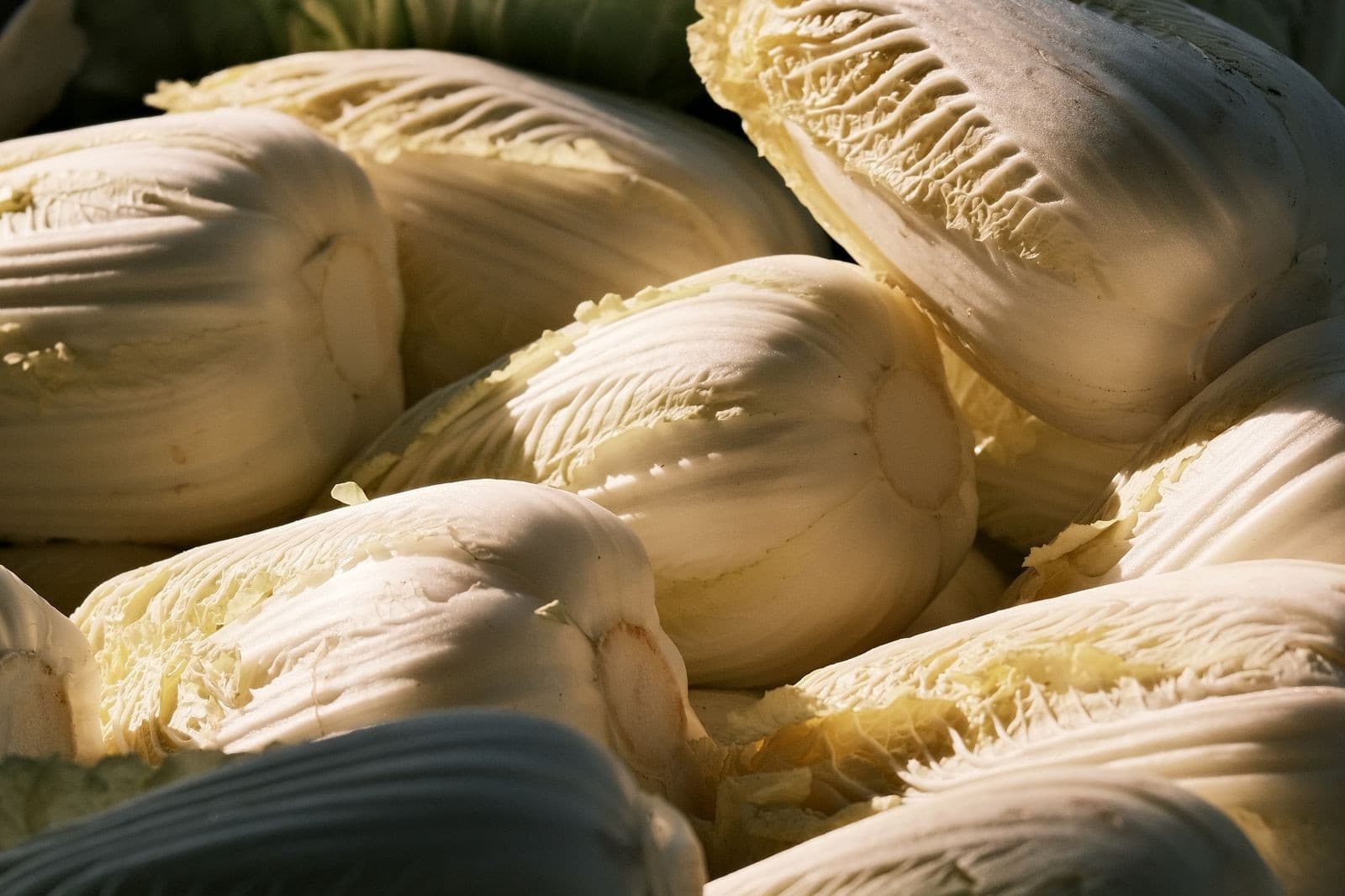
If you're living in Korea in late autumn, you might notice something unusual: mountains of napa cabbage outside supermarkets, neighbors hauling giant red tubs, and a faint smell of garlic drifting through the hallway. Welcome to kimjang season in Korea — the time of year when families make a whole winter's worth of kimchi in one go.
It's one of the most community-centered traditions you'll see here, and there's a good chance it touches your life directly — especially if your landlord lives in the building or you've gotten friendly with the neighbor next door. Here's what kimjang is, why it happens, and how to handle it well when kimchi shows up at your door.
What Is Kimjang (김장)?
Kimjang (김장) is the tradition of making and sharing large batches of kimchi to last through winter. Instead of making a small jar here and there, families — often several generations, plus relatives and sometimes neighbors — gather for a day (or two) to prepare dozens of heads of cabbage at once.
It's important enough that in 2013 UNESCO added "Kimjang, making and sharing kimchi in the Republic of Korea" to its Representative List of the Intangible Cultural Heritage of Humanity. The key word there is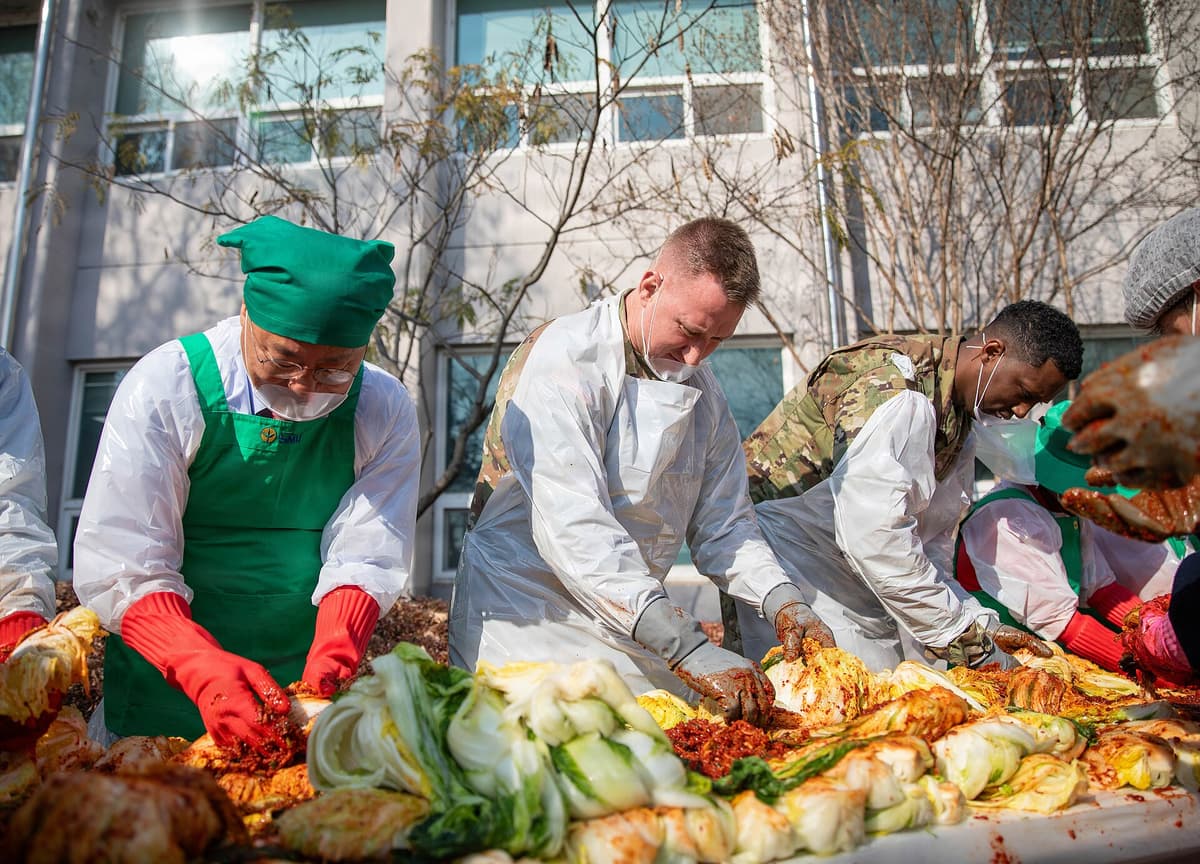 sharing. Kimjang has never been only about food. It's about family showing up, neighbors helping each other, and kimchi being passed along to people who couldn't make their own.
The basic ingredients
- Napa cabbage (baechu, 배추): The star. It's halved or quartered, then salted so the leaves soften.
- Korean radish (mu, 무): Julienned into the filling, or made into a separate radish kimchi.
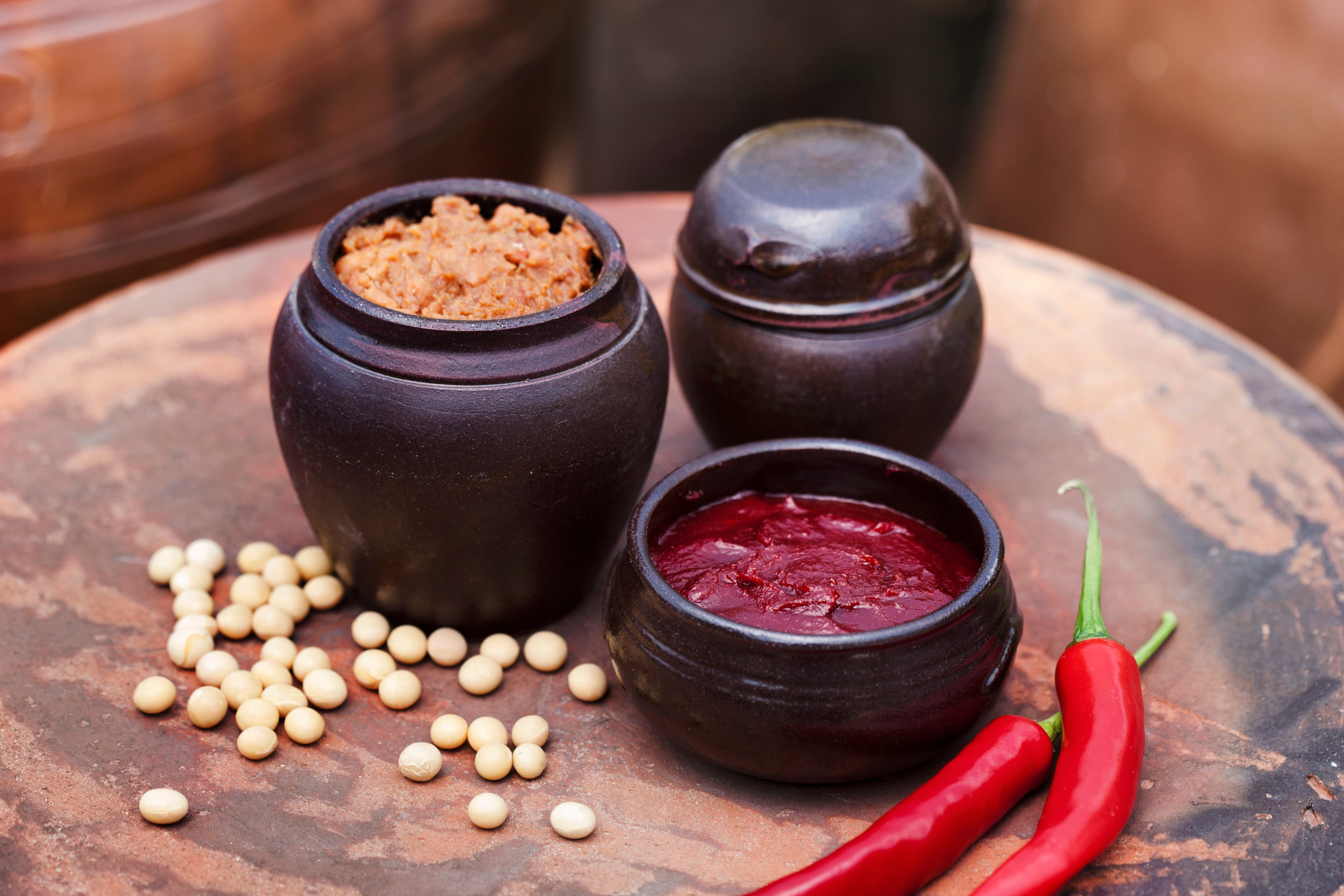
- Red pepper flakes (gochugaru, 고춧가루): The source of kimchi's color and heat.
- Garlic, ginger, and green onions: The aromatic backbone of almost every recipe.
- Salted seafood (jeotgal, 젓갈) and fish sauce (aekjeot, 액젓): Salted shrimp (saeujeot, 새우젓) and anchovy fish sauce are common. This matters if you have allergies or don't eat seafood — more on that below.
All the seasonings are mixed into a red paste called sok (속, or 김칫소), which gets rubbed between every single cabbage leaf. That's the part that takes hours — and the part guests are usually asked to help with.
When Does Kimjang Season Happen?
Most households make kimjang somewhere between around mid-to-late November and early December. There's no official date, though — timing depends on the weather and on where in Korea you live.
- Colder regions go earlier: Northern and inland areas tend to start sooner because temperatures drop earlier.
- Southern regions go later: Places with milder winters, like the southern coast and Jeju, usually make kimchi later.
- Weather is the real signal: Families traditionally wait until it's cold enough that kimchi won't over-ferment quickly, but not so cold that the cabbage freezes. Korean weather news often talks about kimjang timing as the season approaches.
- Weekends are peak time: Since many family members work, kimjang often happens on a weekend so everyone can pitch in.
💡 Tip: If you'd like to see (or join) a kimjang, keep your late-November and early-December weekends flexible. Ask a Korean friend or coworker when their family is doing it — that question alone often starts a great conversation.
Why Make So Much Kimchi at Once?
Watching a family process 30, 50, or even more heads of cabbage in a single day can look a little extreme. But there are solid reasons behind it.
- It started as winter survival: Before refrigerators and year-round produce, fresh vegetables were scarce in winter. Fermented kimchi kept vegetables on the table until spring.
- Autumn cabbage is at its best: Late-autumn cabbage is considered firm and sweet — ideal for kimchi. Buying in season is also usually better value.
- Kimchi changes over time: Fresh kimchi is crisp and bright; after weeks of fermentation it turns sour and deep. One big batch gives a family kimchi for months — fresh at first, then perfect for kimchi stew (kimchi-jjigae, 김치찌개) and fried rice later on.
- It's a family event: For many Koreans, kimjang is one of the few days the extended family works side by side. Recipes get passed down, and every family's kimchi tastes a little different.
- Sharing is built in: Batches are split between relatives' homes, and extra often goes to neighbors, friends, and people living alone.
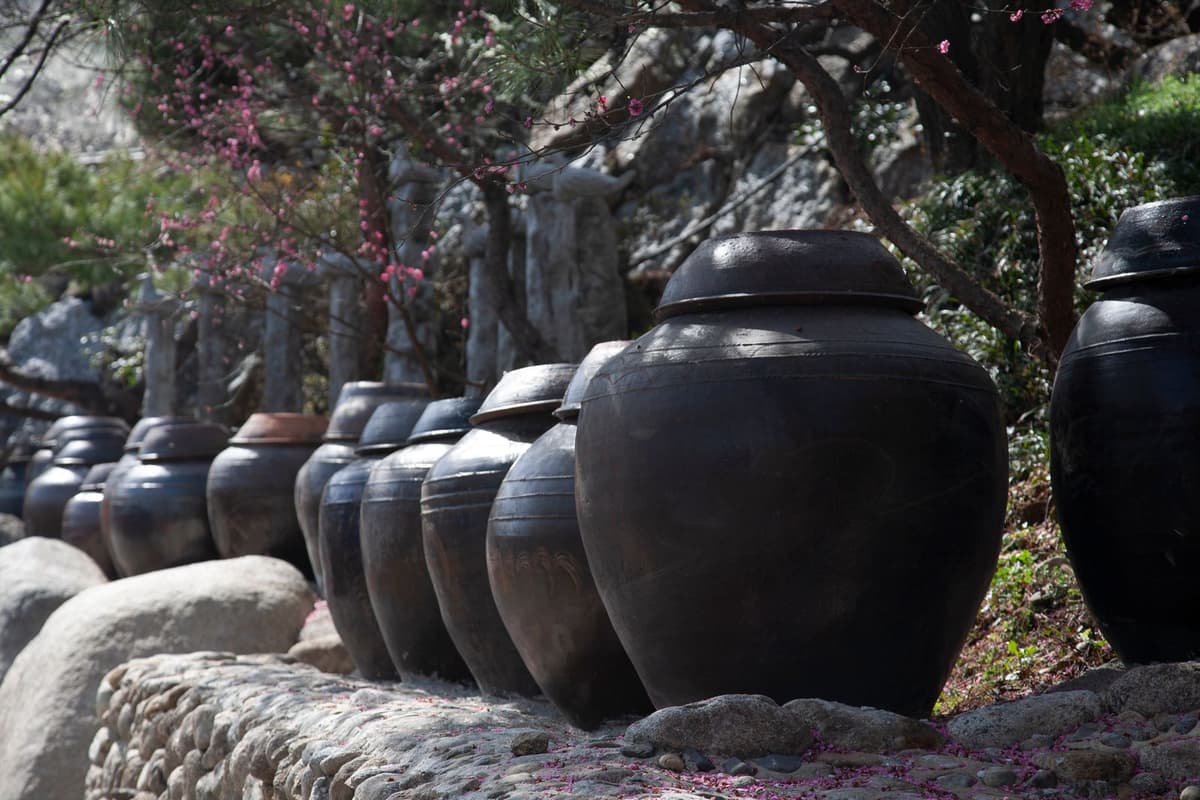
Modern life has changed things. Plenty of younger Koreans now buy kimchi or get it from their parents instead of making it, and many families buy pre-salted cabbage (jeorim baechu, 절임배추) to skip the most exhausting step. Many homes also have a dedicated kimchi refrigerator (kimchi naengjanggo, 김치냉장고) rather than burying earthenware pots (onggi, 옹기) in the ground like in the past. Still, the tradition is very much alive.
What You'll Notice in Your Neighborhood
Even if nobody invites you, kimjang season is hard to miss. Here's what you might see around your home:
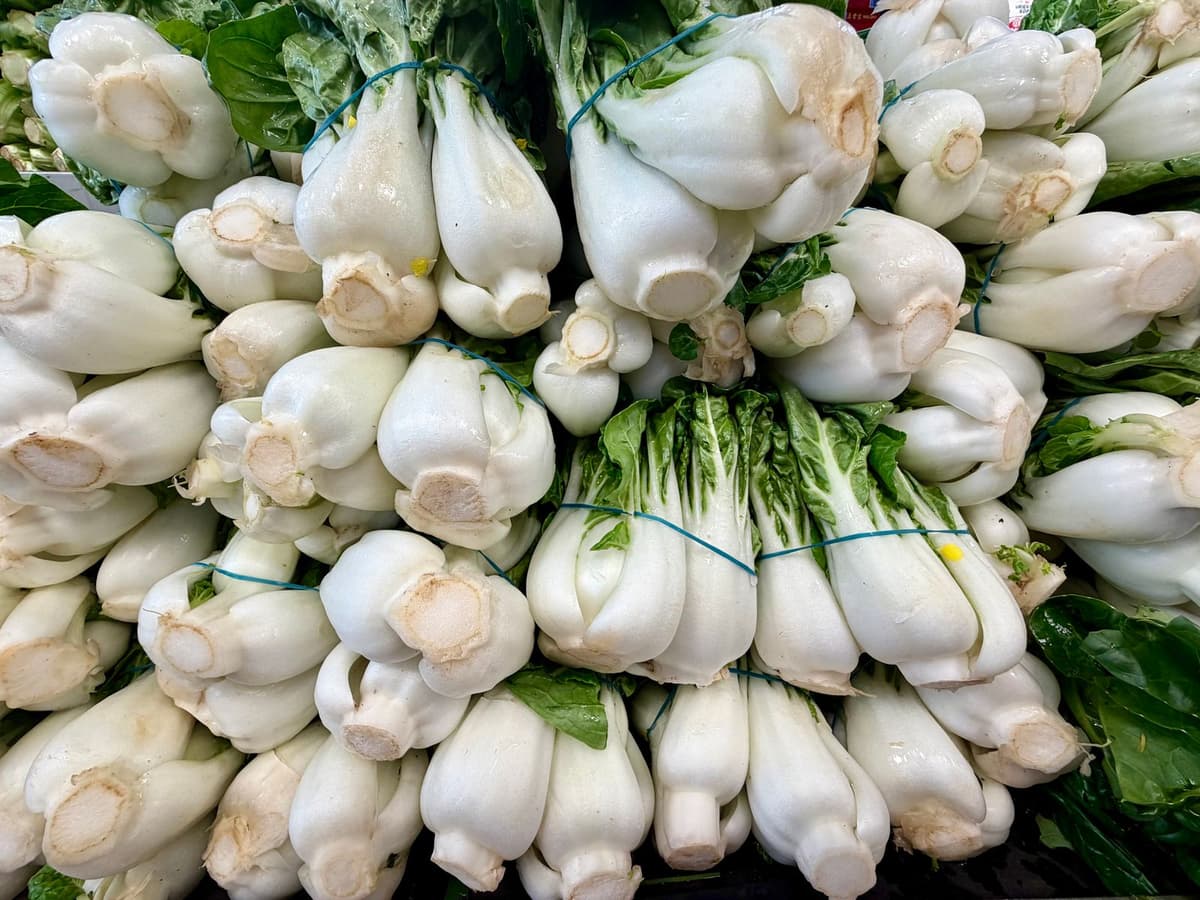
- Piles of cabbage and radish: Supermarkets, traditional markets, and trucks parked on the street often sell cabbage in bulk — by the net bag or by the box.
- Boxes of pre-salted cabbage: Big boxes of jeorim baechu stacked at building entrances or delivered to doors.
- Giant red rubber tubs (고무대야): Used for salting and mixing. You'll spot them on balconies, rooftops, and in the courtyards of older houses.
- Notices in your building: Some buildings and apartment complexes post notices around kimjang — for example, about shared spaces or how to dispose of cabbage scraps. If you can't read one, a translation app will do the job.
- Strong smells: Garlic, fish sauce, and fermenting kimchi — especially in older villas or one-room buildings with shared hallways.
- Charity kimjang events: Community centers, companies, religious groups, and volunteer organizations often hold large kimjang events to make kimchi for low-income households and seniors living alone. Look for rows of people in aprons and red gloves in a plaza or parking lot.
📍 Where to look: Traditional markets are the best place to feel kimjang season up close. In Seoul, a large market like Gyeongdong Market (경동시장) is a good bet, but your neighborhood market will likely have its own version — cabbage stacked high, radish by the sack, and gochugaru sellers doing brisk business.
💡 Tip: Kimjang creates a lot of food waste (cabbage scraps, leftover filling). If you're making or helping with kimchi at home, follow your building's food waste rules — in most places it's separated into designated bags or bins. For more guides on daily life in Korean housing, browse the Homes in Korea blog.
When Your Landlord or Neighbor Shares Kimchi
This is the moment many foreigners aren't sure how to handle. There's a knock, and your landlord — often an older owner living on the top floor of the building — hands you a container of freshly made kimchi. Here's how to respond well.
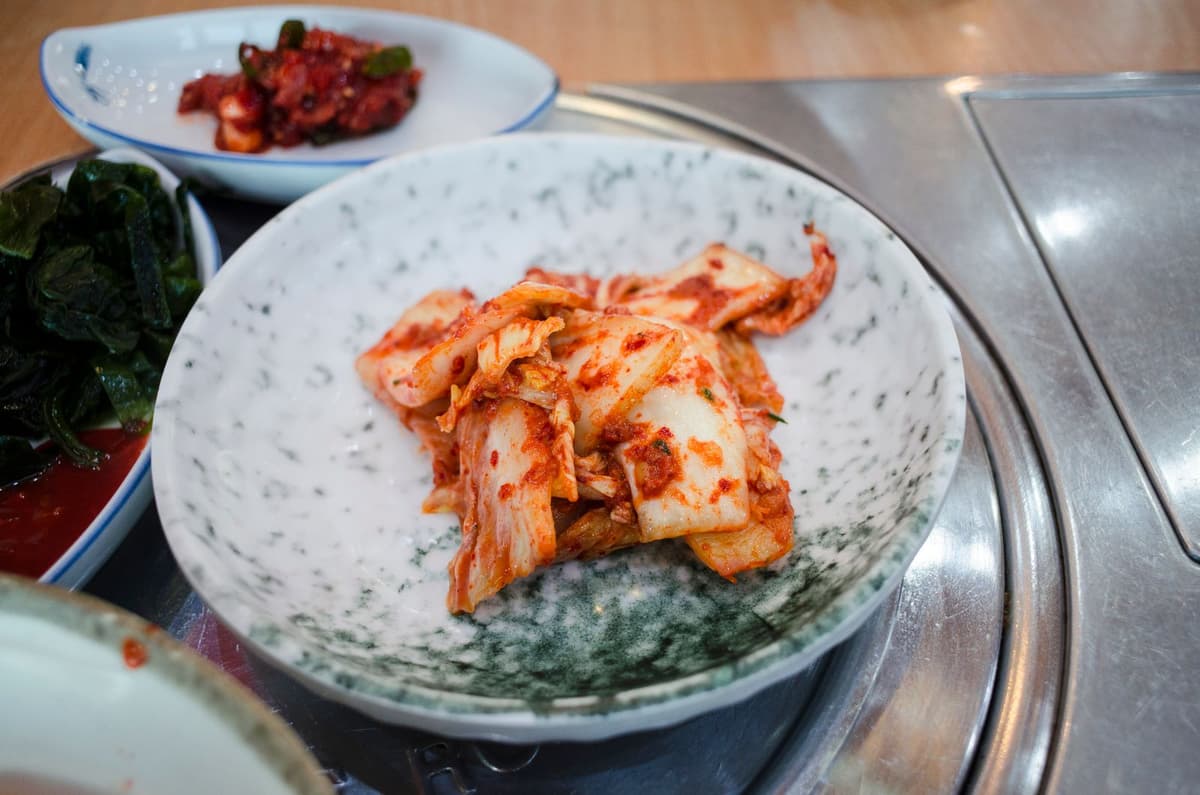
Accepting it
- Take it with both hands: Receiving things with two hands is a polite gesture in Korea, especially with elders.
- Say thank you, warmly: "Thank you" (gamsahamnida, 감사합니다) works perfectly. Add "I'll enjoy it" (jal meokgesseumnida, 잘 먹겠습니다) — it will genuinely make their day.
- Show a little interest: Asking "Did you make this yourself?" (직접 만드셨어요?) is an easy way to show appreciation.
- If you really can't eat it: Allergies, dietary rules, or zero spice tolerance are fair reasons to decline. Explain politely (e.g., "I'm allergic to shellfish") and thank them for thinking of you. If you're just unsure whether you'll like it, it's usually kinder to accept and try a little.
Storing it in a small studio
- Refrigerate it right away: Kimchi keeps fermenting. At room temperature it sours fast.
- Use an airtight container: Kimchi smell travels into everything else in your fridge. If it came in a plastic bag, move it into a sealed container.
- Leave some headroom: Fermenting kimchi releases gas and liquid, so an overfilled container can leak or pop. Open it over the sink.
- Press it down: Keep the kimchi pushed under its own liquid so it tastes good longer.
- Shared kitchen? In a sharehouse or goshiwon (고시원), label your container and wrap it well. Your housemates will thank you.
Returning the container (this matters!)
If the kimchi came in the giver's own container, give it back — and here's the unspoken rule: Koreans traditionally don't return a dish empty. Put something small inside or alongside it.
- Seasonal fruit: Tangerines, apples, or persimmons are easy and appreciated.
- Snacks from your home country: A great conversation starter — people love trying something new.
- A short note: Even a simple "감사합니다! (your name)" on a sticky note is charming.
Wash the container and return it within a week or so. Small moments like this go a long way toward a good relationship with your landlord — which helps later when you need a repair or want to talk about renewing your contract.
If You're Invited to Help With Kimjang
Being invited to someone's kimjang is a real compliment — it means they see you as part of the circle. Say yes if you can. Here's how to prepare.
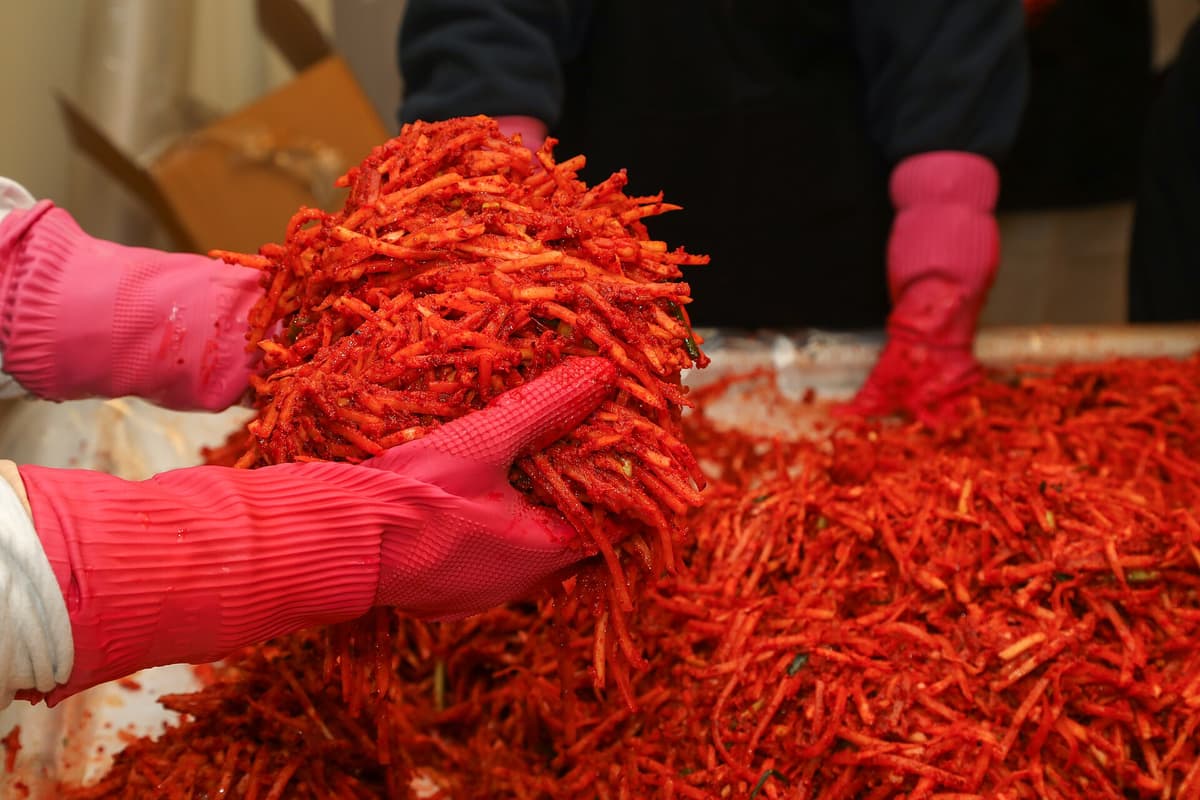
- Wear clothes you don't care about: Gochugaru stains sleeves, aprons, everything. Dark clothes are your friend.
- Expect floor work: Kimjang often happens sitting on the floor around plastic sheets or big tubs. Comfortable, stretchy pants help.
- Wear the gloves: Hosts usually provide rubber or disposable gloves. Chili and garlic on bare hands can sting — especially if you touch your eyes later.
- Bring a small gift: Drinks, fruit, or snacks for the group are a nice gesture. Not required, but appreciated.
- Mention allergies or diet early: If you're vegetarian, vegan, or allergic to fish or shellfish, tell the host before the day. Most kimchi contains jeotgal or fish sauce, and some families add raw oysters (gul, 굴).
- Ask, then copy the elders: Every family has its own method. Ask "How should I do this?" (어떻게 해요?) and follow along. Typical tasks: spreading sok between leaves, carrying tubs, washing up, or packing kimchi into containers.
The best part: the food
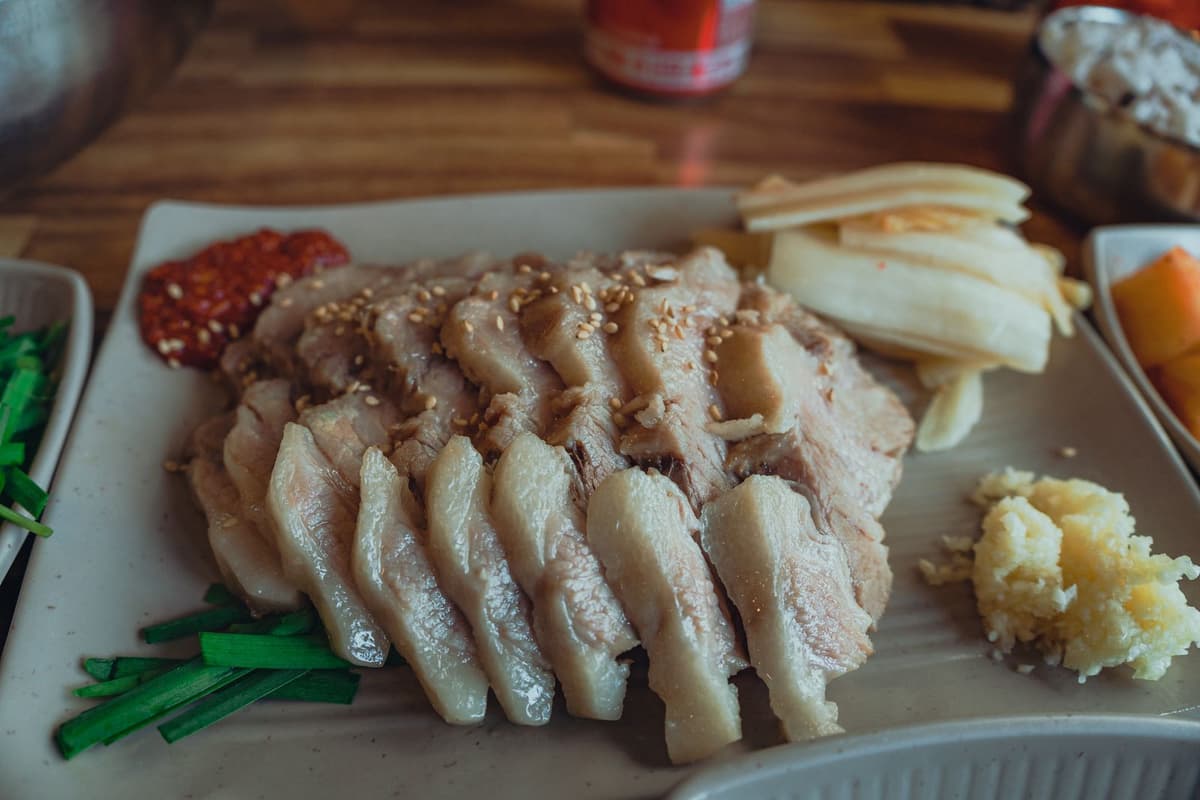
After hours of work, there's usually a feast. The classic kimjang meal is bossam (보쌈) — slices of boiled pork wrapped in salted cabbage with a bit of the kimchi filling, eaten alongside freshly made kimchi. Plenty of people will tell you this meal is the real reason to show up.
💡 Tip: You'll probably go home with a container of kimchi. Bring a bag — and remember the don't-return-it-empty rule above.
Want to Experience Kimjang Without an Invitation?
No Korean family connections yet? You still have options.
- Volunteer at a charity kimjang: Many districts and organizations look for helpers during kimjang season. Korea's national volunteer portal, 1365 (1365.go.kr), lists opportunities, though it's mostly in Korean. Your university's international office or a local global center may also know of events.
- Take a kimchi-making class: Cooking studios and cultural centers run kimchi-making experiences, some in English. Search "kimchi making class" plus your city.
- Check local festivals: Some cities have held public kimjang or kimchi festivals around November. Dates and formats change from year to year, so check your city or district office (gucheong, 구청) website and local tourism pages.
- Ask your community: Language exchange groups, university clubs, and foreigner communities sometimes organize group kimjang days.
- Make a mini batch at home: Buy one or two heads of cabbage (or a small box of pre-salted cabbage) and follow a recipe. A small batch still counts — and your neighbors might notice and offer tips.
Kimjang season is a reminder that in Korea, home isn't just your four walls — it's also the people around you. A container of kimchi from your landlord could be the start of a great neighbor relationship.
Looking for a place where you can settle in and feel part of the neighborhood? Browse foreigner-friendly rooms and apartments across Korea on Homes in Korea. Find a home
You might also like