When Do Koreans Turn the Boiler On and How Should You Set It in a One-Room?
Oct 7, 2026
The first cold morning in a Korean one-room usually arrives before you have figured out the white box on the wall. The floor is cold, the shower is lukewarm, and the buttons are all in Korean.
Last updated: October 6, 2026 (KST)
Here is the short version. Seoul one-rooms start running the boiler in the last ten days of October, when overnight lows settle under 10°C and the first frost arrives around October 23. Set the controller to 실내 (room) mode at 18 to 20°C, or 온돌 (floor) mode at 40 to 50°C if your room is drafty. Lower the number when you go out instead of pressing 외출. A month of real heating in a one-room costs roughly 40,000 to 85,000 KRW (about $29 to $62) on Seoul's 2026 gas price, and if the boiler itself breaks, your landlord pays.
When Koreans Actually Turn It On
There is no official switch-on date. Koreans go by two things: the weather and the solar calendar.
📍 The weather: Seoul's October averages a daily low of 10.6°C, and November drops to 3.5°C. The first ice in the city usually shows up at the end of October. Once mornings sit under 10°C, a south-facing apartment may cope with a blanket, but a ground-floor or north-facing one-room will not.
📍 The calendar: Sanggang (상강, "frost descends") falls on October 23 this year, and Ipdong (입동, "winter begins") on November 7. Korean news and apartment notices treat these as the start of heating season. If your building has central (district) heating, the management office usually turns the system on around Ipdong, so check the notice by the elevator.
Rule of thumb for 2026: run the boiler at a low setting from the week of October 20, and expect to need it properly from the first week of November.
What the Buttons Mean
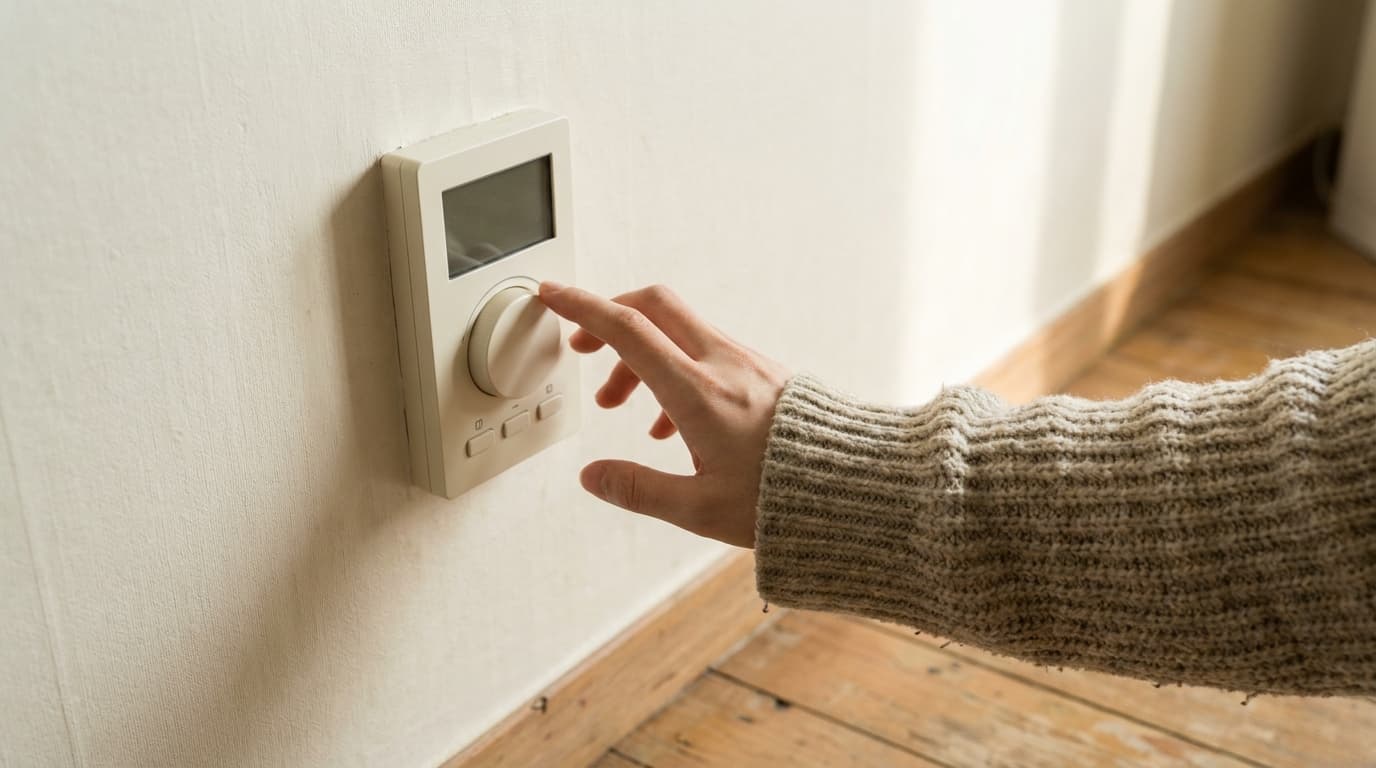
Most one-rooms use a Kyungdong Navien, Rinnai or Kiturami wall controller. The labels differ slightly, but every unit has the same five functions.
- 실내 (room temperature) measures the air temperature at the controller and runs the boiler until the room reaches your number. Navien's range is 10 to 40°C. This is the normal setting for a well-sealed room.
- 온돌 (floor / ondol) controls the temperature of the hot water circulating under your floor instead of the air. The number is water temperature, 40 to 83°C on Navien units. Use 40 to 50°C normally and 60 to 65°C for an hour or two in a cold snap. Pick this mode if your windows leak air, because 실내 mode in a drafty room runs nonstop chasing a number it never reaches.
- 예약 (timer) means "heat for X minutes every Y hours," for example 20 minutes every 3 hours. It keeps the floor from going fully cold and is the mode heating technicians recommend for a room you leave every day.
- 온수 (hot water) sets your shower temperature, 30 to 60°C. Leave it at 40°C or so, and turn the tap handle back to the cold side when you finish so the boiler does not fire every time someone opens a tap.
- 외출 (away) turns heating off and keeps only hot water, with a freeze-protection cycle that kicks in when the room drops below about 8 to 10°C. It exists to stop pipes bursting, not to save money.
💡 TIP: Ondol (온돌) is the traditional Korean under-floor heating. Your boiler pumps hot water through pipes in the floor, so the floor warms first and the air later. Give it 30 to 60 minutes before judging whether a setting works.
The 외출 Mistake
Every winter, Korean consumer sites run the same story: a household pressed 외출 every morning to save gas and got a bigger bill. In one Seoul example, switching from 외출 mode to simply lowering the thermostat cut the monthly bill from 150,000 KRW to 90,000 KRW (about $109 to $65).
The reason is simple. Gas use rises about 7% for every 1°C you heat the room. If 외출 lets the room fall from 20°C to 10°C while you are at work, recovering those 10 degrees in the evening costs far more than holding 16 or 17°C all day.
- Out for the day: lower 실내 mode by 3 to 5°C, or set 예약 to 20 minutes every 3 hours.
- Away 3 days or more: use 외출. Before you go, check the forecast; if lows will drop below minus 12°C, leave the heating on at a low setting instead.
- District heating buildings: never cut the power to the controller. The valves can fail and the bill goes up.
What a Month of Heating Costs in 2026
Seoul City Gas charges 22.5268 KRW per megajoule for home cooking and heating as of October 1, 2026, plus a basic fee of 1,250 KRW (about $0.90) a month and 10% VAT. The price has barely moved since the 6.8% increase of August 2024, and the October 2026 tariff shows a 0.0% change.
Your meter counts cubic meters, and the bill converts them to megajoules at roughly 42 MJ per cubic meter. Two worked examples on the current price:
- 40 m³ (a one-room heated evenings and weekends): about 1,690 MJ, roughly 43,000 KRW (about $31) with the basic fee and VAT.
- 80 m³ (heated most of the day, long showers): about 3,380 MJ, roughly 85,000 KRW (about $62).
Those match what tenants report online: 30,000 to 80,000 KRW (about $22 to $58) for a typical one-room winter month, with outliers above 140,000 KRW (about $101) when the boiler runs on 온돌 at high temperature all day. Summer bills for the same rooms are 3,000 to 10,000 KRW (about $2 to $7), so budget for the jump in December.
Each 1°C you take off the setting saves about 7%, roughly 5,000 KRW (about $3.60) a month. Sealing window gaps saves about the same again and raises the felt temperature by 2 to 3°C. For a wider breakdown of monthly costs in a studio, see our living expenses in Korea guide, and for the summer version of this problem, Korean electricity bills in summer.
💡 TIP: Paying is easy once you have a Korean bank account. Download 가스앱 (Gas App, Korean only) to see the bill, pay by card, set up auto-debit and book the meter check when you move out. Without an account, take the paper bill (지로) to any convenience store or bank. Seoul City Gas call center: 1588-5788.
Keeping the Pipes from Freezing
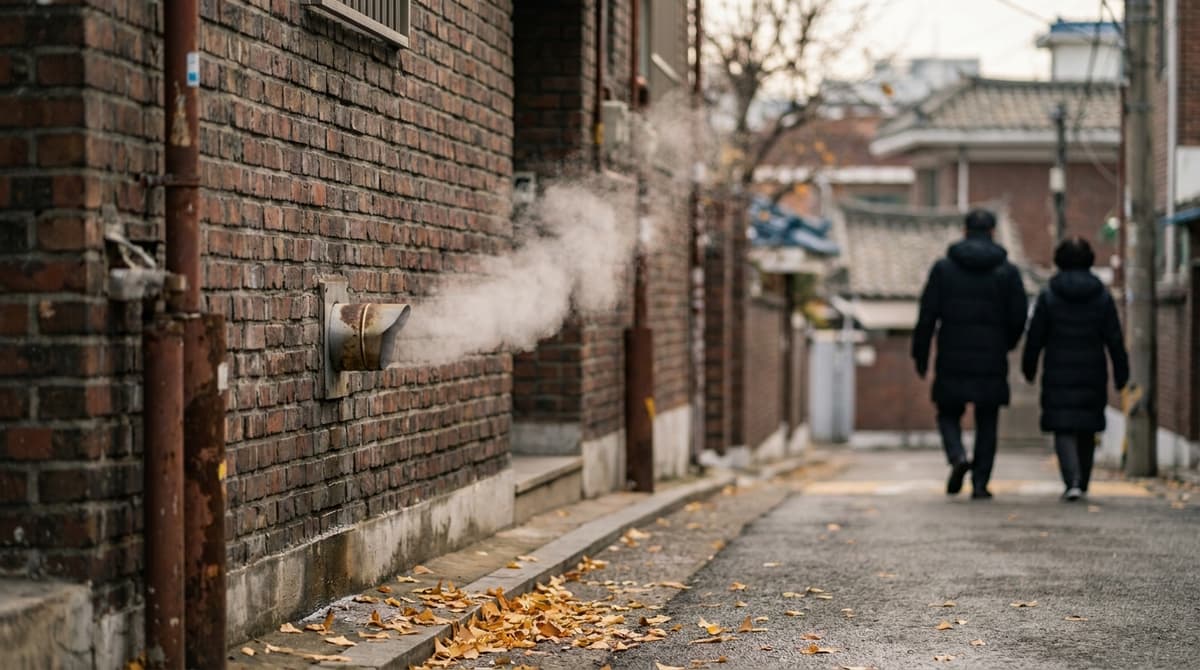
Seoul logged 43 frozen water meters in two days last January, and the city's advice is the same every year. Freeze risk jumps when temperatures stay below minus 5°C for two or more days.
- Never power the boiler off in winter. If you leave for a trip, use 외출 or 동파방지 (freeze protection), which is the same function on some units.
- On nights below minus 10°C, let a tap run in a thin stream, about one paper cup every 33 seconds. It costs about 300 KRW (about $0.20) a night.
- If the meter or an exposed pipe is on an outside wall, wrap it in old clothes and a plastic bag.
- If something does freeze, pour lukewarm water over it slowly. No hair dryers, no boiling water.
Who Pays When the Boiler Breaks
Under Civil Code Article 623, the landlord must keep the room fit to live in for the whole lease, and the boiler is part of the building. Repairs for age and normal wear are the landlord's cost, and if the room has no heat at all you can also ask for a rent reduction under Article 627.
You pay only when the damage is your fault: leaving a window open in a cold snap, switching the boiler off to save money, or ignoring a fault until it got worse. Message your landlord or the budongsan (부동산, real estate agent) the day you notice a problem, in writing, with a photo of the error code on the controller. Ask the repair technician to confirm in writing whether the cause was wear or user error. Many contracts include a clause making small consumable fixes the tenant's cost, so check yours before you argue.
For draft-proofing, mold and condensation, which are separate problems, see our winter mold and condensation guide and the general heating in Korea tips.
Koreans say the first sign of winter is not snow but the moment you sit down on the floor and it is warm. Set the box on the wall once, properly, and that moment comes without a surprise bill in January.
Looking for a warm place for the winter? Homes in Korea helps foreigners find furnished rooms and monthly rentals across Seoul, with heating and bills explained up front.