Heated Mat, Electric Pad or Heating Tent, Which One Actually Cuts a Korean Winter Bill?
Oct 7, 2026
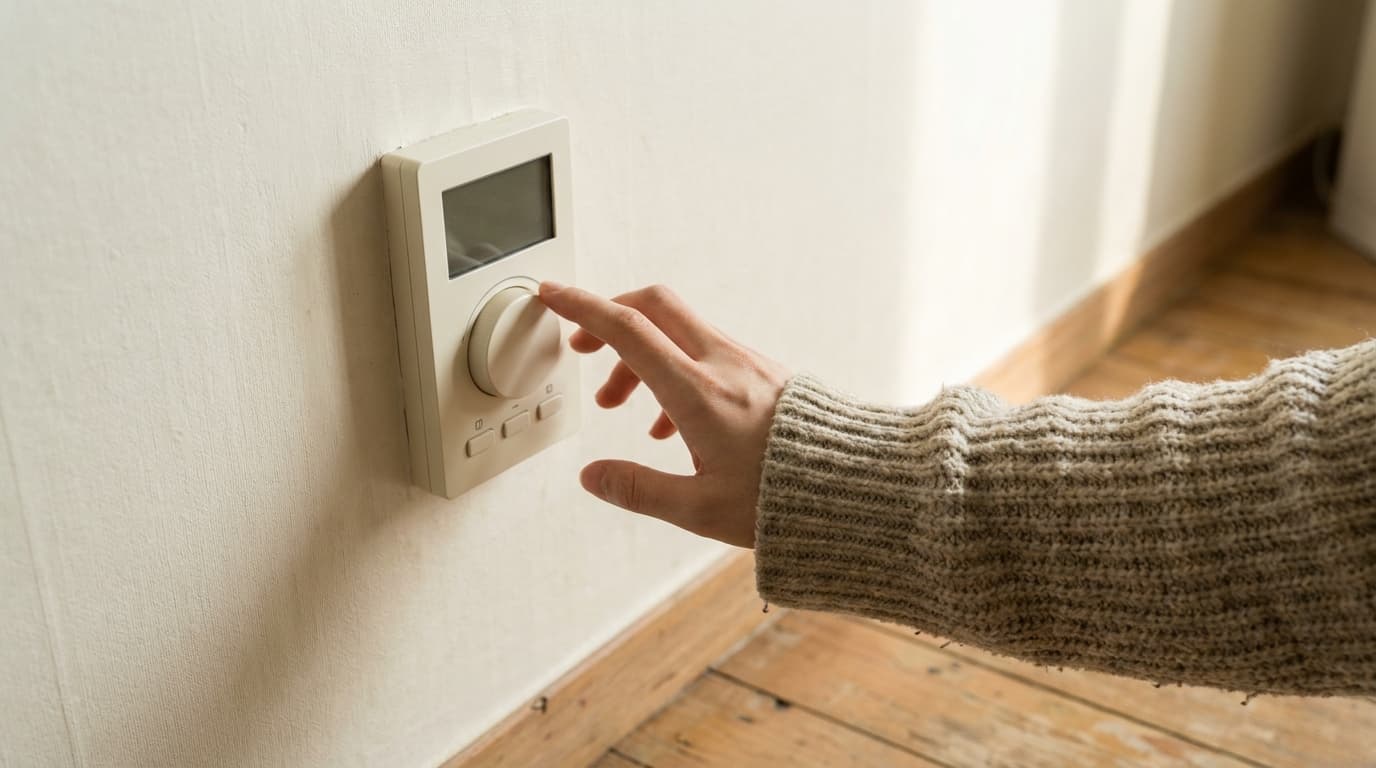
The first cold night in a Korean one-room usually ends the same way: you turn the boiler dial up, listen to it run for an hour, and wake up to a floor that is warm and a room that is not. Koreans solved this a long time ago, and the answer is not the boiler.
Last updated: October 6, 2026 (KST)
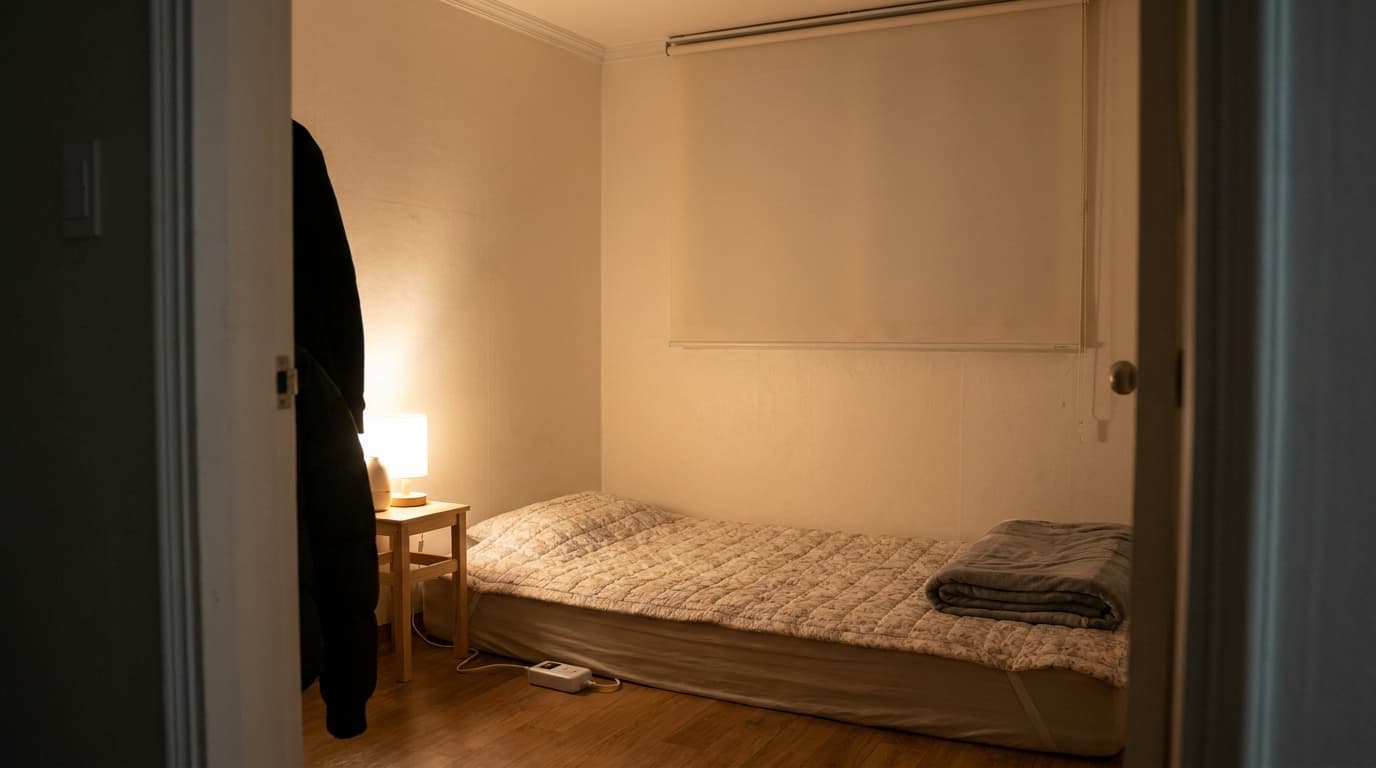
Here is the bottom line. For one person on a single mattress, an electric heating pad (jeongi-yo, 전기요) is the cheapest to buy and to run, at roughly 2,000 to 5,000 KRW (about $1.50 to $3.70) a month in electricity. A water-heated mat (onsu-maeteu, 온수매트) costs two to four times more up front and about double to run, but it has no heating wire under your body and holds heat longer. A heating tent (nanbang-tenteu, 난방텐트) uses no electricity and adds about 3 degrees around your bed. Most students end up with a pad or mat plus a tent, and the boiler set low. One caveat: goshiwon and dormitories ban all three.
How the Three Options Work
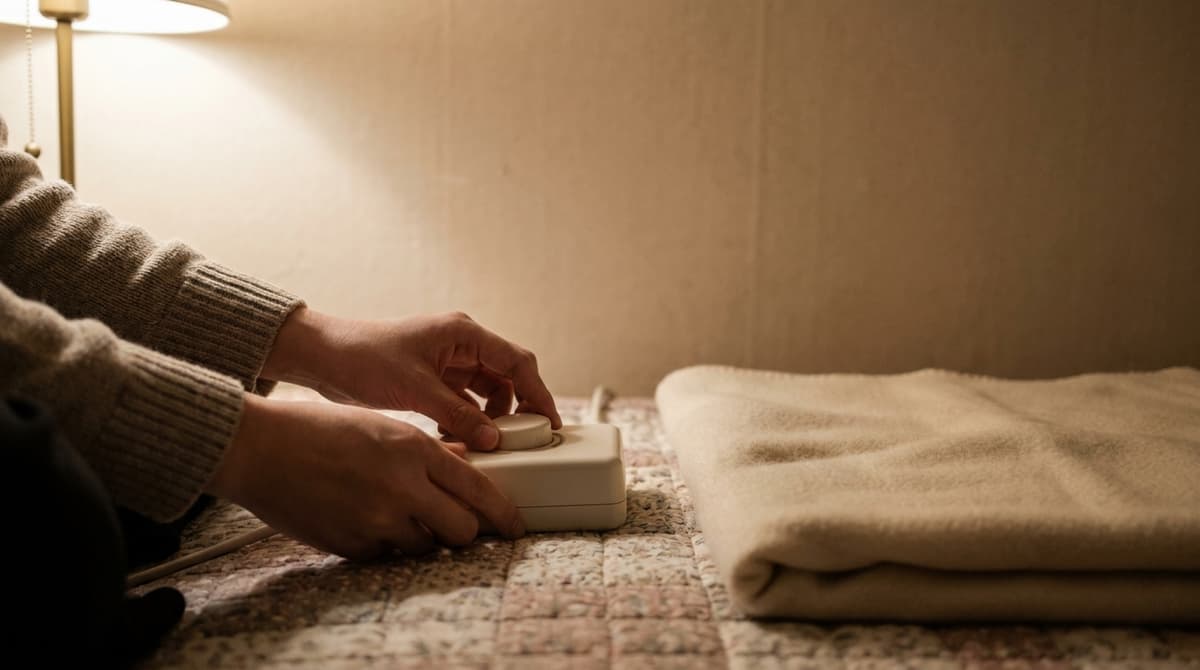
- Electric pad (전기요 or 전기장판): a thin quilted mat with a resistance heating wire inside and a dial controller on a cord. Rated power is 100 to 300 W. Single sizes are 80 to 110 cm wide.
- Water mat (온수매트): a mat threaded with hoses, connected to a small boiler box that heats water and pumps it through. Rated power is 200 to 400 W for a double, dropping to about 50 to 60 percent once the water is hot. Preheating takes 10 to 20 minutes.
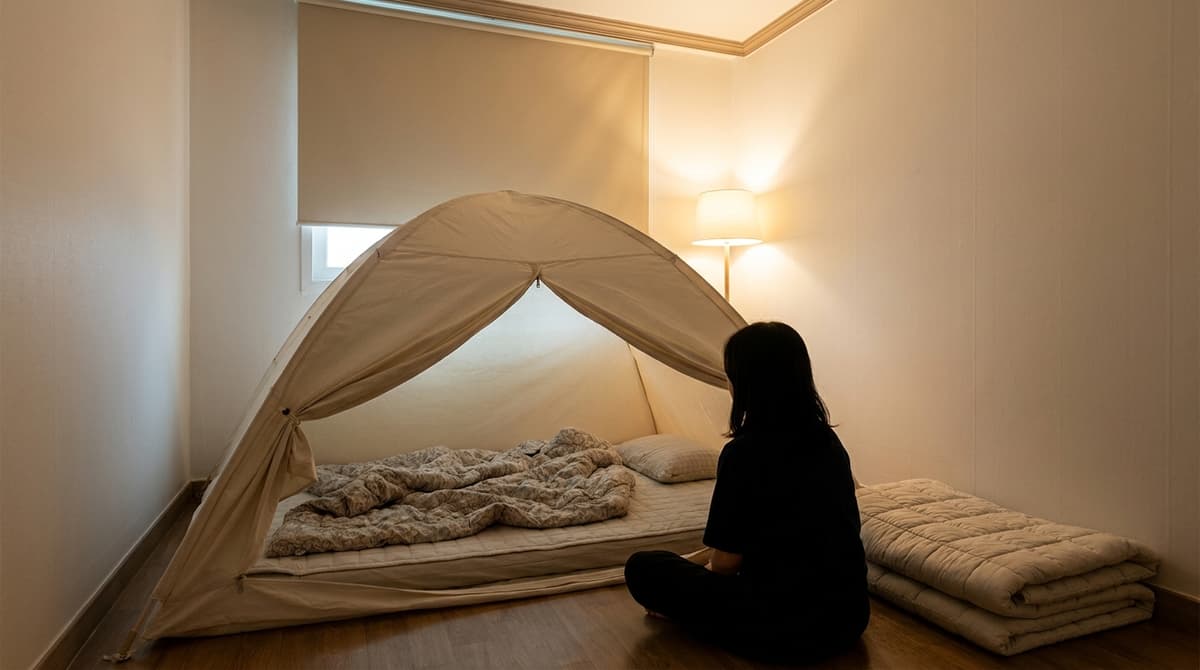
- Heating tent (난방텐트): a fabric tent on PE poles that stands over your mattress, with a mesh vent on top and a zip door. It plugs into nothing. In a Korea Consumer Agency test, with the room at 20 degrees and an electric mat running, the air inside reached about 23 degrees.
What They Cost to Buy in 2026
- Electric pad: 50,000 to 300,000 KRW (about $36 to $220). Costco Korea sells an Imetec single cotton pad, 80 by 150 cm and 150 W, for 118,900 KRW (about $87), and a Beurer 100 W heat cushion for 44,990 KRW (about $33).
- Water mat: 100,000 to 400,000 KRW (about $73 to $292). A Kyungdong Navien EMW720 sells online for about 430,000 KRW (about $314); budget singles around 100,000 KRW use natural circulation.
- Heating tent: 23,490 to 68,800 KRW (about $17 to $50) for one-touch tents on Coupang, with a single bed dome at 45,900 KRW. Brand-name 따수미 fabric tents start at 102,900 KRW (about $75).
💡 TIP: Before paying for any pad or mat, type the KC certification number from the listing into the Safety Korea database and confirm it matches the model. KC has been mandatory on every heating mat sold since July 2017.
What They Cost to Run Each Month
Korea's residential tariff is progressive. A one-room that stays under 200 kWh a month pays the Tier 1 rate of 120 KRW per kWh plus 14 KRW of surcharges, about 134 KRW per kWh before VAT. Cross 200 kWh and every extra unit costs 228.6 KRW. The figures below assume eight hours a night for 30 nights. Our summer electricity bill guide explains the tiers in full.
- 150 W electric pad: the element cycles off once the mat is warm, so real draw is 30 to 50 percent of rated. At half duty that is 18 kWh, about 2,400 KRW (about $1.75) in Tier 1 and about 4,100 KRW (about $3) in Tier 2.
- 300 W water mat: the boiler drops to about 55 percent after preheating, so eight hours is about 40 kWh, about 5,300 KRW (about $3.90) in Tier 1 and about 9,000 KRW (about $6.60) in Tier 2. At full rated draw it tops out near 12,000 KRW.
- Heating tent: 0 kWh. Its saving comes from the boiler. Korea East-West Power puts each 1 degree you lower the room at 7 percent off the heating bill, and the tent lets you drop the room 3 degrees for the same warmth in bed.
Safety, and Why the Latex Mattress Matters
Fire services counted 1,403 electric mat and heater fires from 2021 to 2023, with 21 deaths and 142 injuries, and January is the worst month. The most common cause, at 36.2 percent, is a crushed or damaged heating wire or a poor contact. The rules that follow are short.
- Never put a latex or memory foam mattress, or a thick blanket, on top of an electric pad. Heat gets trapped and the mat overheats. The Korea Consumer Agency issued a warning on exactly this in December 2025.
- Roll, never fold. A folded wire concentrates heat at the crease. Unplug it when you leave the room.
- Sleep on low. Of 902 electric mat burn cases from 2017 to 2019, 63.1 percent were second-degree burns needing two to three weeks of treatment, mostly on the legs and feet. Skin held at 40 to 50 degrees for over an hour burns without you feeling it, so use the timer or sleep mode.
- Keep the controller 30 cm from your head. The National Radio Research Agency measured an electric mat controller at 2.71 percent of the human exposure limit at 30 cm, the mat surface at 0.2 percent, and a water mat boiler at 0.22 percent. Distance cuts the number to a tenth.
💡 TIP: Do the three-second check every night: plug and outlet, cord and mat surface, then the controller for heat.
Check Your Housing Rules First
This is the step foreigners skip. Goshiwon ban heating appliances outright because of fire risk, and the examples they give are electric pads, electric heaters and kettles. Many also run central heating you cannot adjust, so ask before you sign; our goshiwon guide covers what else to check. Dormitories go further: Sahmyook University's list, updated September 30, 2026, bans electric pads, electric mats, water mats, electric blankets and heat cushions, with demerit points and confiscation. Share houses vary by operator, so ask in writing. In your own one-room, all three are yours to use.
For running the boiler itself, see our heating in Korea guide. The damp walls that come with a warm bed in a cold room are covered in our winter mold and condensation guide.
Buying, Storing and Throwing Away
- Where to buy: Coupang and 11st carry every brand; Costco Korea carries Imetec and Beurer pads. Kyungdong Navien, Gwittarami (귀뚜라미), Ilwol (일월) and Hanil (한일) are the water mat names you will see.
- Size: a single mat, 80 to 110 cm wide, fits a super single. Buy a double only if your bed is one; the whole mat heats either way.
- Storing a water mat: let the water cool, drain it fully, stand the mat upright with the drain hole down for a day, then roll it loosely.
- Disposal: both mats go out as large waste (daehyeong-pyegimul, 대형폐기물). Buy the sticker on your district office website, roll and tape the mat, and leave it at the reported spot. Fees are set by district; Incheon's Yeonsu-gu charges 6,000 KRW (about $4.40) for an electric pad and 9,000 KRW (about $6.60) for a single water mat.
Koreans have slept on heated floors for centuries, and a mat on the bed is the part of ondol (온돌, underfloor heating) you can afford to run every night. Buy one that fits your bed, keep it off the latex, and let the boiler rest.
Looking for a one-room that is already warm? Homes in Korea helps foreigners find furnished rooms and monthly rentals across Seoul, with heating and utilities explained in English.