What to Wear in Korea by Temperature from October to February
Oct 7, 2026
Every October a chart goes around Korean group chats. It lists eight temperature bands and what to wear in each, and people check it against the morning forecast the way others check the bus app. It is a better guide than anything in your suitcase.
Last updated: October 6, 2026 (KST)
Here is the bottom line. Dress for the morning low, not the afternoon high, and build every outfit from layers you can take off indoors. In Seoul the average low is 10.6°C in October, 3.5°C in November, -3.4°C in December and -5.5°C in January. First frost lands around October 28 and first snow around November 20. A lightweight down jacket covers you until mid November. After that you need a real coat or padded jacket, thermals, and something for your neck.
The Korean Temperature Chart
The bands below are the standard version Koreans share. Temperatures are the morning forecast, which is the one that decides your day.
- 28°C and up Sleeveless or short sleeves in cool fabrics.
- 23 to 27°C Short sleeves, thin shirts, shorts or cotton pants.
- 20 to 22°C Long sleeves plus a light outer layer.
- 17 to 19°C A sweatshirt or hoodie without fleece lining, long pants. Most of early October.
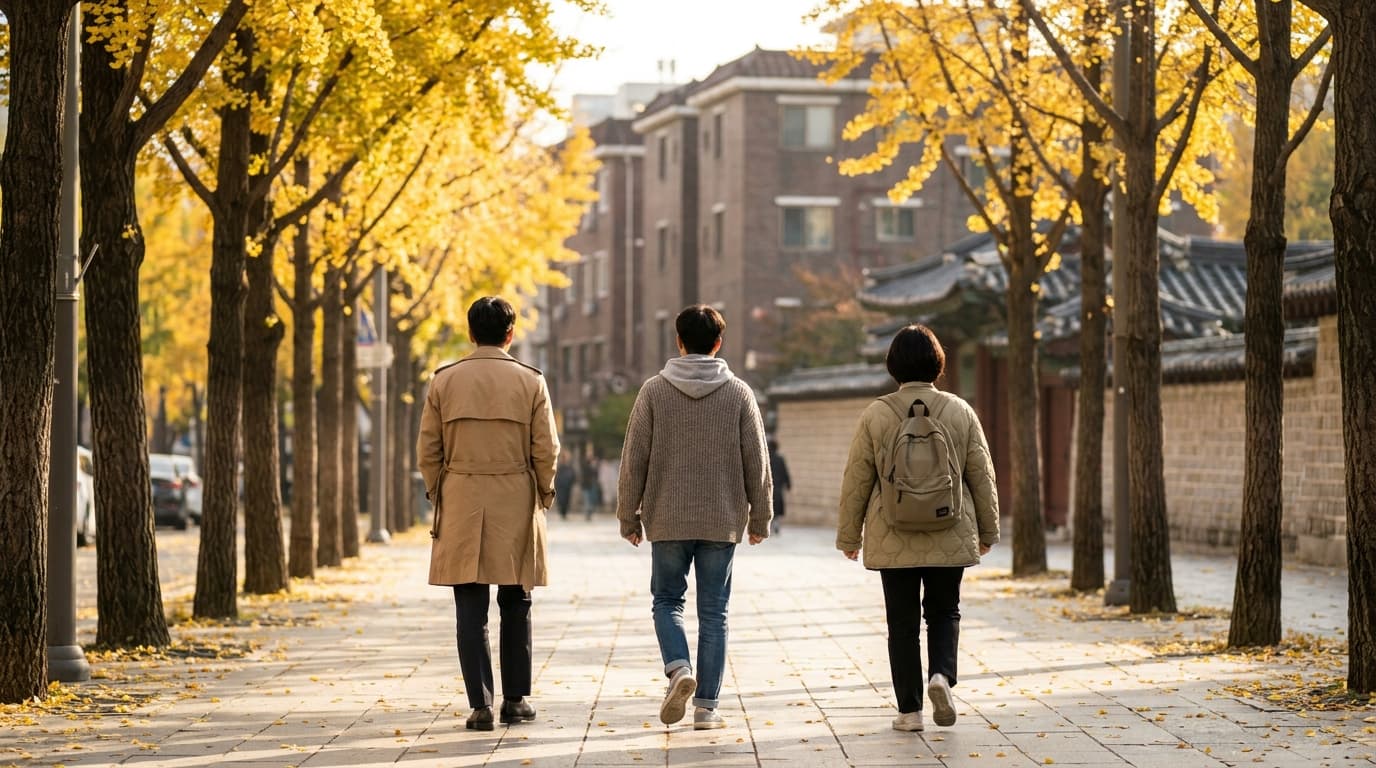
- 12 to 16°C A jacket or cardigan, jeans or stockings. Koreans say thin layers beat one thick piece here. Mid to late October.
- 9 to 11°C A trench coat, windbreaker or denim jacket over a knit, gimo (기모, fleece-lined) pants. Early November.
- 5 to 8°C A wool coat or leather jacket, thermal underwear, knitwear. Late November.
- 4°C and below A padded jacket (padding, 패딩) or thick coat, scarf, fleece-lined everything. December to February.
When the gap between morning and afternoon is wide, which it is for most of October, the chart's own advice is to carry an outer layer you can shed at lunch.
💡 TIP: Check the forecast low in your weather app before you dress. A day listed as 18°C in Seoul in late October usually started at 8°C.
What Each Month Feels Like in Seoul
The chart gets easier once you map it to the calendar. These are the Korea Meteorological Administration's 1991 to 2020 normals for Seoul.
- October Average 15.0°C, low 10.6°C. Starts in hoodie weather and ends in jacket weather. First frost arrives around October 28, and in 2025 it came on exactly that date, about six days early.
- November Average 7.5°C, low 3.5°C, about two snowy days. The month where most newcomers get caught out. First ice is normal around November 3, first snow around November 20.
- December Average 0.2°C, low -3.4°C, about six snowy days. Full winter coat month. In 2025 the first snow did not fall until December 4, with a forecast low of -9.2°C.
- January Average -2.0°C, low -5.5°C, about seven snowy days. The coldest month, with a record low of -22.5°C.
- February Average 0.7°C, low -3.2°C. Still coat weather, but the afternoons start to loosen.
Korean winters also move in cycles. The old pattern is called samhan saon (삼한사온, three cold days then four milder days) as the Siberian high strengthens and relaxes. It is no longer strictly regular, and recent winters have had cold spells of more than ten days, but the swing is real. When the morning low is forecast at -12°C or below for two days, the weather agency issues a hanpa juuibo (한파주의보, cold wave advisory). Treat that as the signal to add thermals under everything, not just a heavier coat.
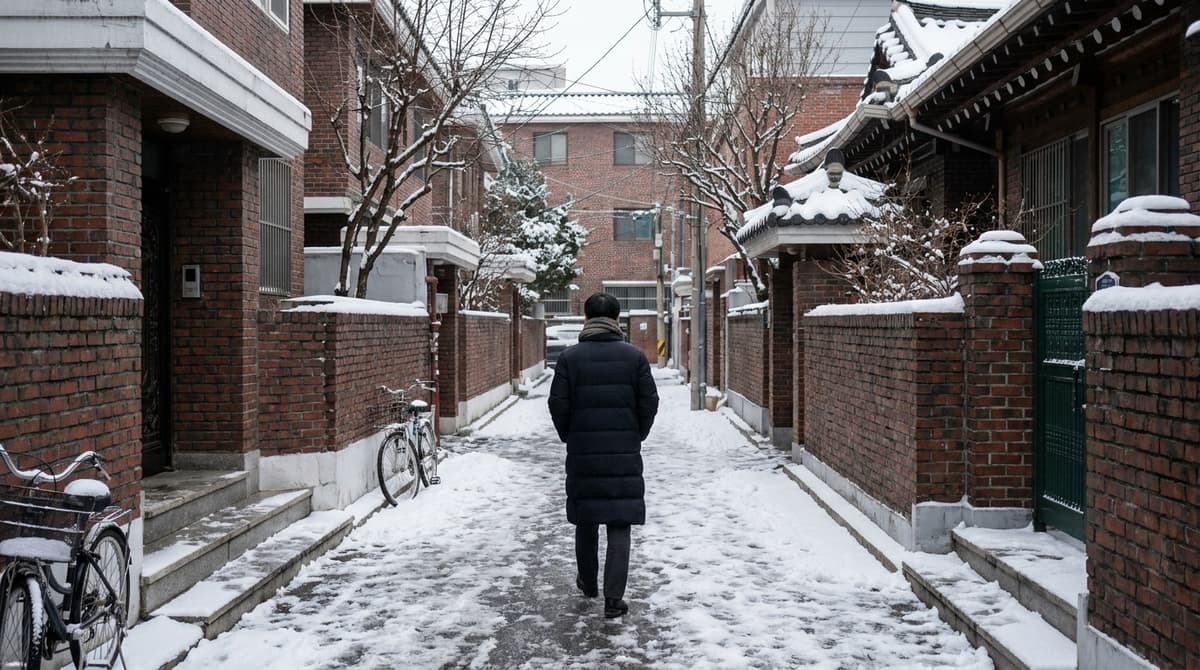
The Three Padding Stages
Koreans do not buy one winter coat. They move through stages as the temperature drops, and the shops stock accordingly.
- Lightweight down (gyeongryang padding, 경량패딩) The autumn piece, worn on its own from mid October and then as a layer under a coat in deep winter. Uniqlo's version runs around 60,000 to 70,000 KRW (about $43 to $50), with 10,000 KRW promotions through November and December. Fashion brands now launch these two weeks earlier than before because autumn keeps getting shorter.
- Short padding (숏패딩) Hip-length puffer, the choice of the under-30 crowd from late November. The North Face Nuptse sits around 200,000 KRW (about $143) retail.
- Long padding (롱패딩) The knee-length black coat that fills every subway car from December, still 45 percent of padded jackets sold in Korea. Most sell for 100,000 to 300,000 KRW ($71 to $214), and a third cost under 100,000 KRW.
If you can buy only one piece, buy the lightweight down first. It works alone in October, under a coat in January, and folds into a bag.
💡 TIP: Big-size shops are rare outside Itaewon. Korean "plus size" starts around a US women's 8, and "free size" means medium at best. For coats in larger sizes, the blocks around Itaewon Station Exit 4 have shops like Kukje Bigsize and Modern Big Clothes; a jacket there runs about 75,000 KRW (about $54), and some shops prefer cash.
Why You Will Be Too Hot Indoors
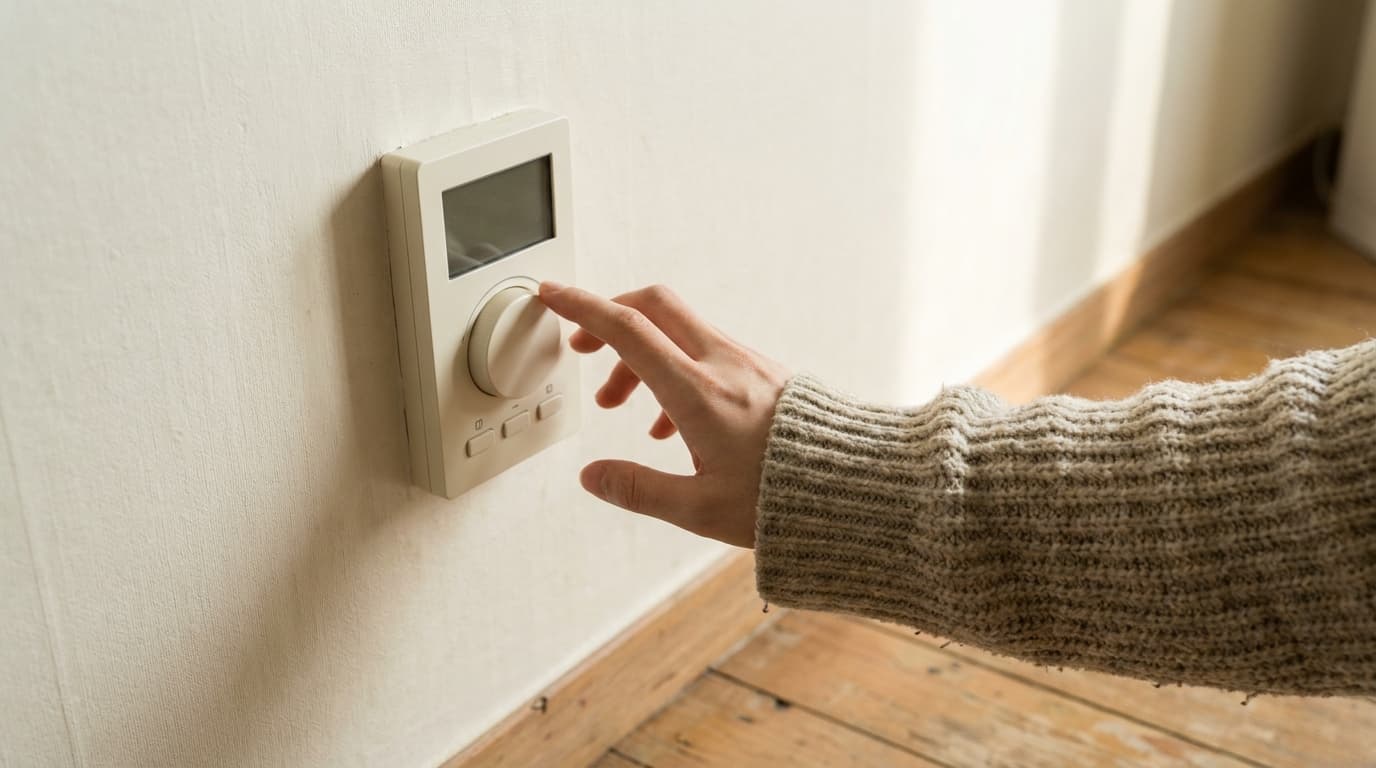
The part the chart does not cover. Korean homes run warm. A typical apartment sits at 22 to 25°C in winter, and one Seoul flat measured close to 30°C on a December morning in 2025. The government recommends 20°C; most of Korea ignores that, and nearly half of Koreans wear shorts at home in midwinter. Seoul Metro's winter standard for subway cars is 18 to 20°C, but packed cars run warmer, and heating complaints are the largest category of subway complaints.
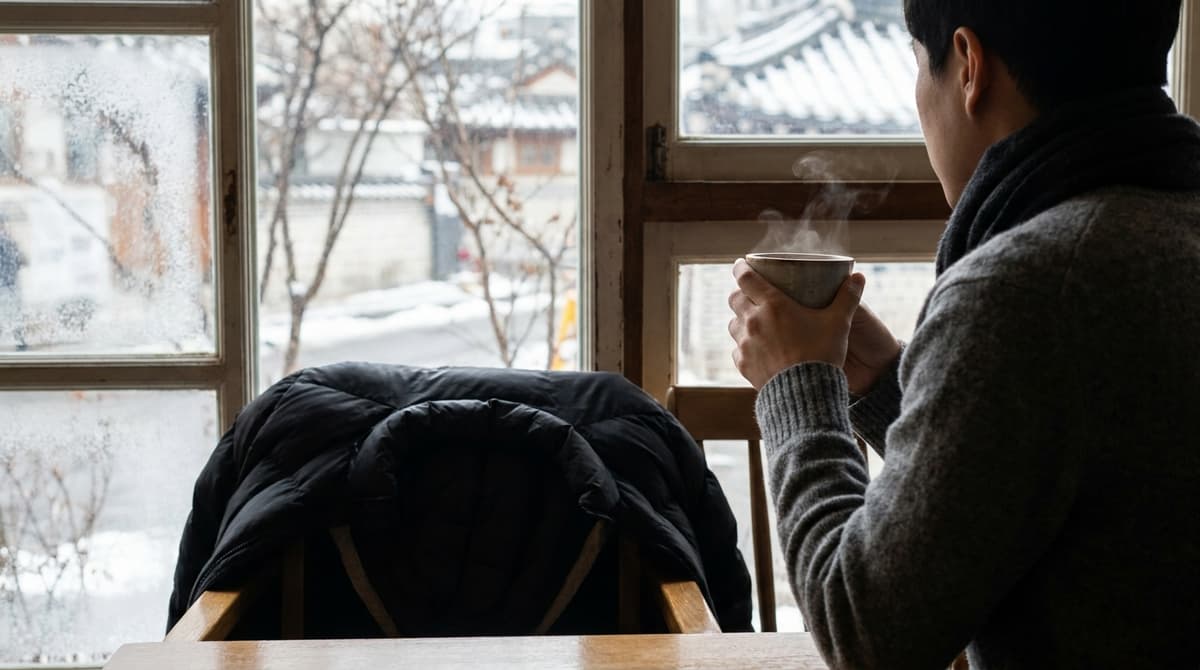
So the layering rule is not about warmth. It is about getting from -5°C on the street to 25°C in a cafe without sweating through a sweater. Thin base, mid layer you can remove, coat on top. Our heating in Korea guide explains the ondol (온돌, floor heating) system that makes rooms this warm.
What to Buy First If You Packed for Somewhere Milder
In order, if you arrived from a warm country in autumn:
① Thermals (히트텍 type) Uniqlo HEATTECH Extra Warm tops and bottoms run around 15,000 to 20,000 KRW (about $11 to $14) each. This is what makes 5°C bearable in a coat you already own.
② A lightweight down jacket See above. Around 60,000 to 70,000 KRW.
③ Fleece-lined pants (gimo 기모) Jeans and sweatpants with brushed lining, sold everywhere from Uniqlo to Musinsa. Fleece full-zip jackets run 25,000 to 30,000 KRW (about $18 to $21).
④ Scarf, gloves, a hat The chart lists a scarf at 4°C and below for a reason. Seoul's wind off the Han River makes the apparent temperature several degrees lower than the number.
⑤ Hot packs (hotpack, 핫팩) Pocket hand warmers cost 1,000 KRW (about $0.70) for two at Daiso, hold about 63°C and last 14 hours. Convenience stores sell them for 1,200 to 1,500 KRW, often on 2+1 deals, and they sell out during cold wave weeks, so buy a box in November. See our convenience stores in Korea guide for what else those shops can do for you.
Buy the thermals the week you arrive; wait for the November promotion on the coat.
For what to do once you are dressed for it, our Korea in winter guide covers the festivals and ice rinks that make the cold worth it.
There is a Korean expression for the first properly cold morning: otgit-eul yeomida (옷깃을 여미다), to pull your collar closed. It describes a gesture, but it is also the signal everyone in the city reads at once. When you see people doing it on the platform, the chart has moved down a band. Dress with them, and winter here is a lot easier than its reputation.
Looking for a warm place for the winter? Homes in Korea helps foreigners find furnished rooms and monthly rentals with heating included across Seoul.