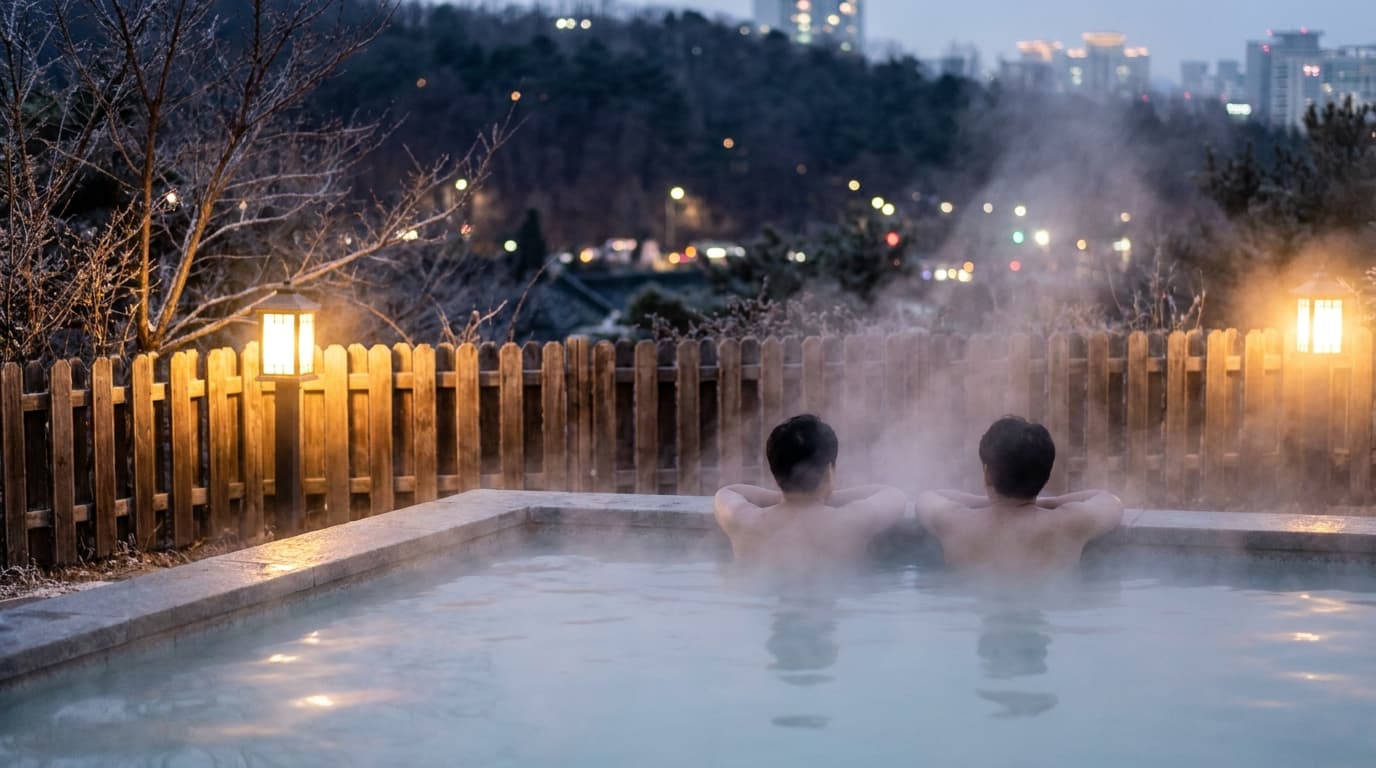
The nearest real hot spring to Seoul is at the end of a subway line. Board a Line 1 train marked Sinchang at Seoul Station, stay on for about two hours, and you step out at Onyang Oncheon, where the water comes up at 58 degrees and a hotel bath costs less than a pizza.
Last updated: November 2, 2026 (KST)
Here is the bottom line. Onyang in Asan is the easy one: Line 1 direct, or KTX to Cheonan-Asan in 40 minutes for 12,800 KRW (about $9.50), and the Onyang Hot Spring Hotel bath is 12,000 KRW. Suanbo in Chungju is the classic hotel-town spa, two hours twenty by bus from Dong Seoul Terminal for 16,000 KRW, with private family baths from 55,000 KRW. Spavis in Asan and Termeden in Icheon add pools and swimsuits. Deoksan in Yesan is the quiet, cheap one, a 10,000 KRW bath under two hours from the Express Bus Terminal. Seoul itself has no legally designated hot spring, whatever the sign on the bathhouse says. Prices are from the facilities' own pages or 2026 listings, and USD figures use about 1,340 KRW to the dollar.
What Counts as a Hot Spring Here
The Hot Spring Act defines an oncheon (온천) as underground water that rises at 25 degrees or more and meets a mineral standard, and the government had 441 designated springs on its books in 2022. That is the difference between an oncheon and the neighbourhood mogyoktang (목욕탕), which heats tap water, or a jjimjilbang, which adds sauna rooms and a sleeping floor. Our jjimjilbang guide covers that side; this one is about the places where the heat comes out of the ground.
The etiquette is the same everywhere. You wash sitting down before you get in, the single-sex bath halls (대온천탕) are nude, and the pool areas at the resort spas require a swimsuit. Towels are either included or a few hundred won extra, a scrub costs 20,000 to 35,000 KRW, and nobody tips. There is no law on tattoos; each place sets its own rule, usually worded as "tattoos that make others uncomfortable", and none of the five below publishes a ban.
Onyang, the One on the Subway
Onyang is the oldest recorded hot spring in Korea, with about 600 years of bathing history. King Sejong's travel palace stood on the site of today's Onyang Hot Spring Hotel, and the stone markers for later kings are still in the hotel garden.
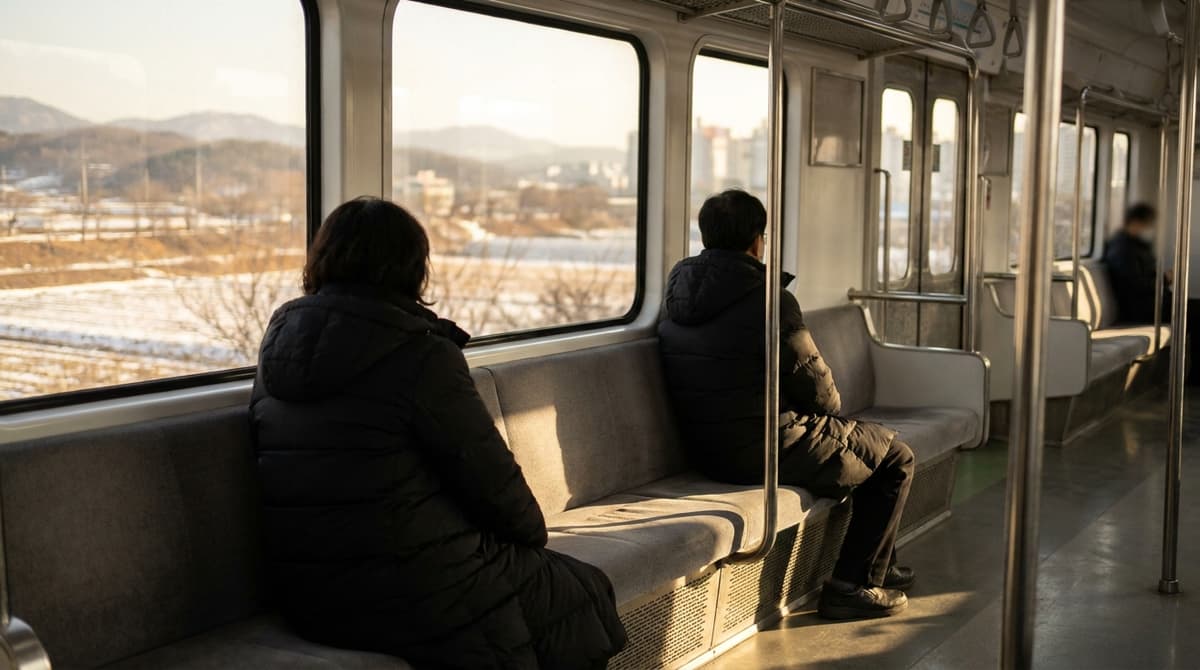
Getting there. Line 1 runs from Seoul Station and Yongsan all the way to Onyang Oncheon Station in about 2 hours 7 minutes, but only on trains marked Sinchang (신창). Many trains turn back at Cheonan; if yours does, get off there and take the next one, which runs every 20 to 30 minutes. The fast way is KTX from Seoul Station to Cheonan-Asan, about 40 minutes for 12,800 KRW with around 30 departures a day, or SRT from Suseo in about 34 minutes for 11,200 KRW. Cheonan-Asan connects to Asan Station on Line 1, two stops from Onyang Oncheon.
The baths. The Onyang Hot Spring Hotel's big bath (대온천탕) charges 12,000 KRW (about $9) for adults, 9,000 for children and 10,000 for seniors, with an open-air pool and saunas fed by 58-degree water at pH 9. It opens 06:00 to 20:00 Sunday to Friday with last entry at 19:00, stays open to 22:00 on Saturdays, and closes on the third Tuesday of each month. It is a five-minute walk from Exit 1. Sincheontang, a public bathhouse the same distance from the station, is 10,000 KRW for adults, 8,000 for seniors and 5,000 for students, with 57-degree water. The Onyang Jeil Hotel pipes 55-degree water to every room if you want to stay over, but it does not publish a day-bath price.
💡 TIP: The hotel bath closes on the third Tuesday of every month. If that is your day, Sincheontang, five minutes from the station, is the fallback.
Suanbo, the Hotel-Town Spa
Suanbo in Chungju is the kind of hot spring town Korean families went to in the 1980s, and most of it still works the same way: a cluster of hotels, each with its own bath, all fed from a city-run supply that pumps 53-degree water at pH 8.3 from 250 metres down. Because the city controls the water, every bath in town has the real thing.
Getting there. Buses leave Dong Seoul Terminal (Line 2, Gangbyeon Station) for Suanbo six times a day, at 09:50, 11:10, 12:40, 17:40, 18:50 and 20:00, for 16,000 KRW (about $12) and about 2 hours 21 minutes. The return side is the catch: the last bus back to Seoul leaves at 16:20, with earlier ones at 07:50, 08:40, 13:40 and 14:40. Take the 09:50 for a day trip and you have about four hours, or stay the night, which is what the town is built for. Chungju's main terminal is 26 minutes away by bus for 4,100 KRW if you miss it.
The baths. The Suanbo Sangrok Hotel bath and sauna is 12,000 KRW for non-guests, 8,000 for guests and 5,000 for children, after a price rise in December 2024; it does not publish hours. The Suanbo Park Hotel sauna runs 06:30 to 22:00 with an outdoor bath and charges guests 10,000. The Ramada Suanbo bath was about 19,900 KRW (about $15) in late 2025. Family baths (가족탕), a private room with its own tub rented by the clock, start around 55,000 KRW for two people on weekdays at the smaller hotels and run to 160,000 to 180,000 KRW for a two-hour suite at the newer healing hotels. The town's official site was down for maintenance when we checked, so confirm prices by phone or on the hotel pages.
Spavis in Asan, When You Want Pools
Spavis is a spa and water park a short bus or taxi ride past Onyang, and it is the one to pick if you are bringing people who are not sold on a nude bath. Its official price list for September to December 2026 puts the bath and sauna at 12,000 KRW, the full spa with the pools at 50,000 KRW (about $37), and an afternoon ticket from 14:00 at 20,000. The bath runs 09:00 to 18:00, the indoor Bade pool and the outdoor pool 10:00 to 17:00, the lazy river 11:00 to 16:00 on weekends, and ticket sales stop an hour before closing. Children under 36 months enter free with ID, mixed bathing stops at age 4, swimsuits are required in the pools and aqua shoes are compulsory. It closes for about two weeks every March for maintenance, March 9 to 20 in 2026.
From Onyang Oncheon Station, Exit 1, take bus 503 or 981 for 20 to 30 minutes, or a taxi for about 15,000 KRW. From Cheonan-Asan KTX station there is no direct bus; a taxi is 20,000 to 25,000 KRW and takes about 25 minutes.
Termeden in Icheon
Termeden is a German-style spa resort in the hills south of Icheon, with indoor and outdoor thermal pools in swimsuits plus a nude bath hall, and it is the most popular hot spring day trip from the south-east of Seoul. It is also the hardest to price. Its official site was unreachable when we checked, and the listings disagree: an August 2024 table had the day ticket at 50,000 KRW for adults and 40,000 for children, and 2026 listings put it at 54,000 to 55,000 and 44,000 to 45,000. Expect about 55,000 KRW (about $41) for a full day in peak season, 25,000 to 29,000 for an afternoon ticket from 14:00, 20,000 to 25,000 for a night ticket from 17:00, and about 15,000 for the bath hall alone. Hours are 09:00 to 20:00 most days and to 22:00 on Saturdays, with sales ending an hour before. Children under 36 months are free, children from age 4 use their own sex's bath, and a swimsuit without a cap is fine in the pools; spa robes rent for 5,000.
Without a car, ride the Gyeonggang Line to Icheon Station, or an intercity bus to Icheon Bus Terminal, then local bus 8203, 26-01 or 26-10 to the Termeden stop. A weekend shuttle from Gangnam Station has run in past seasons, but the 2026-27 times were not posted. The resort's phone is 031-645-2000.
Deoksan, the Quiet One
Deoksan in Yesan is where Koreans go when they want a hot spring without the crowd. Express buses leave the Central City terminal (Line 3, 7 and 9, Express Bus Terminal Station) for the Deoksan Spa stop seven times a day between 07:10 and 20:10, about 1 hour 53 minutes for 9,100 KRW (about $6.80), or 13,300 on the premium bus; the ride back is around 2 hours 25 minutes.
The Deoksan Saipan Grand Hot Spring charges 10,000 KRW for adults and 6,000 for children, with a family bath at 40,000 KRW (about $30) for two and a half hours, and it opens every day from 05:20 to 20:30. The big resort next door, Splas Resom, listed its adult day ticket at 55,000 KRW in 2025 with the sauna open 06:00 to 19:00, but its 2026 prices were not published when we checked.
Nothing Certified Inside Seoul
Search for a hot spring in Seoul and you will find bathhouses that call themselves one. Woori Sulfur Hot Spring in Jayang-dong, a walk from Guui Station, draws water from a 1,040 m well; Bongil Spa Land in Gwanak-gu charges 11,000 KRW plus 2,000 for the spa outfit and quotes a pH of 9.12. Neither appears in any hot spring protection district gazette we could find, so treat them as good bathhouses with deep wells rather than designated oncheon. Spa Lei in Jamwon-dong is a women-only spa, not a hot spring at all.
Booking the Train and the Bus
Korail folded KTX and SRT into one app, Korail+, on August 3, 2026, and cut KTX fares by about 10 percent in the process. It takes foreign cards, and Klook has sold Korail tickets in 20-plus languages since April 2026 if the app refuses yours. Winter weekends to Cheonan-Asan sell out days ahead, so book the outbound seat first and keep the return flexible. Intercity buses to Suanbo and Deoksan are on the Tmoney GO app or at the terminal counter; a plain T-money card covers Line 1 to Onyang, where the fare from Seoul Station comes to around 3,100 to 3,300 KRW, and the Climate Card stops working past the Seoul boundary.
| Spring | From Seoul | Time | Fare | Bath | Pools |
|---|---|---|---|---|---|
| Onyang (Asan) | Line 1 to Onyang Oncheon, or KTX to Cheonan-Asan | 2 h 07 / 40 min + 2 stops | about 3,200 / 12,800 | 12,000 | no |
| Suanbo (Chungju) | Bus from Dong Seoul | 2 h 21 | 16,000 | 12,000 | no |
| Spavis (Asan) | Onyang Oncheon + bus 503 or 981 | 2 h 30 | about 3,200 + bus | 12,000 | 50,000 |
| Termeden (Icheon) | Gyeonggang Line to Icheon + bus | depends on the bus | metro + bus | about 15,000 | about 55,000 |
| Deoksan (Yesan) | Express bus from Central City | 1 h 53 | 9,100 | 10,000 | no |
Before You Go
Hot spring water above 50 degrees is cooled before it reaches the tub, but the hot pools still sit around 42, so start in the warm one and get out when you feel light-headed. Drink water before and after, skip the bath if you have had alcohol, and give it a miss when you have a fever or an open wound. If you are living in a one-room with a shower stall and no tub, which is most of us, this is also one of the few ways to sit in hot water for an hour all winter, and our boiler guide explains what heating a tub at home does to the gas bill.
Settling into a Korean winter? Homes in Korea helps foreigners find furnished rooms and monthly rentals in Seoul, with the subway line and the heating explained in English before you sign.