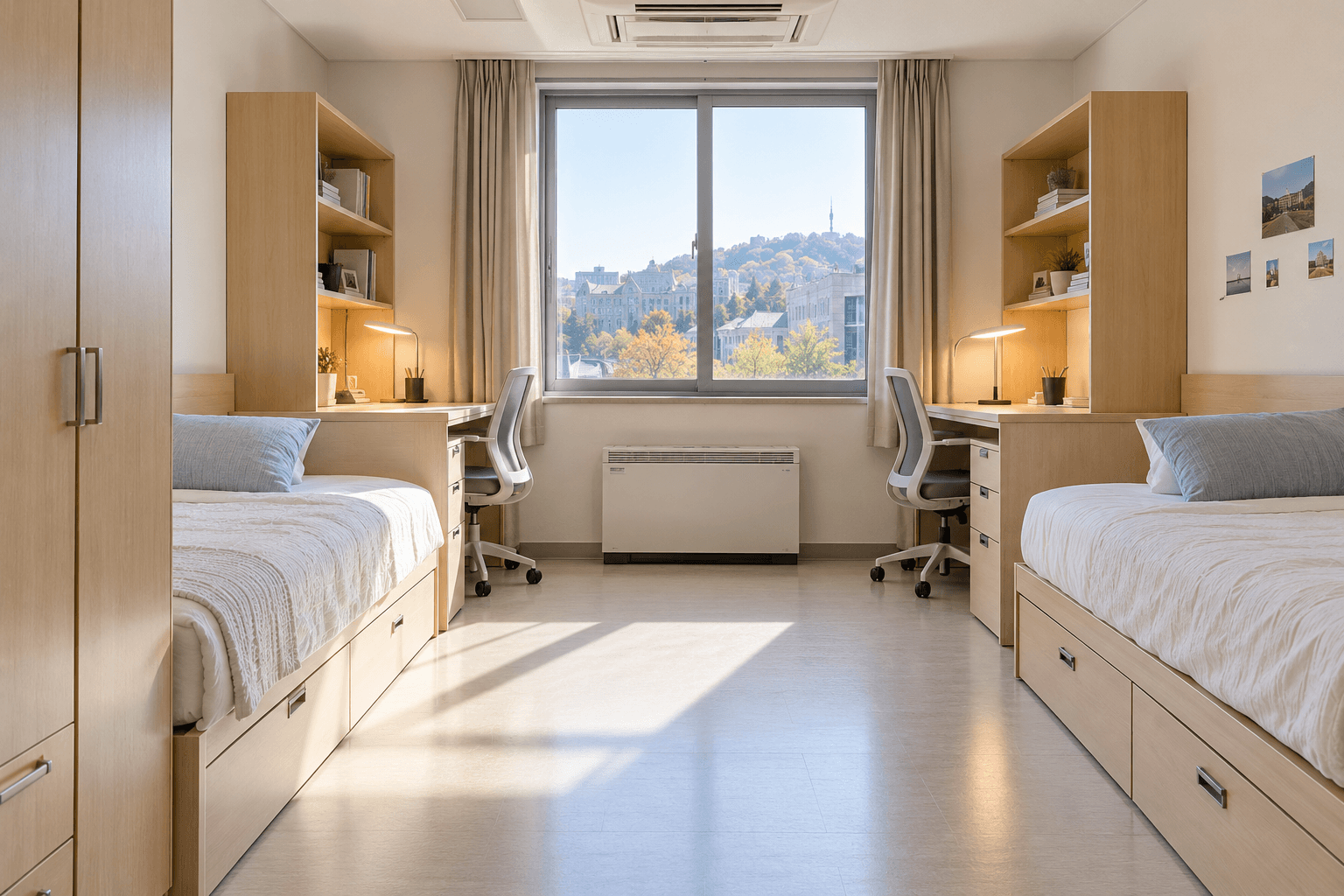
Choosing a university, a major, and the right student housing in Korea are all important parts of planning your study abroad experience.
Korea offers several housing options, including university dormitories, studio apartments, goshiwons, and share houses. Each comes with different costs, living conditions, and levels of privacy, so choosing the cheapest option isn't always the best decision.
Which type of housing best fits your budget and lifestyle? Let's explore the different options, along with real-world examples, to help you find a place that feels right for you.
1. University Dormitories | Want to Live Close to Campus?
Imagine having an early morning class without worrying about a long commute.
University dormitories are usually located on or near campus, making it easier to get to class. Living alongside other students can also help you make friends and settle into university life.
Dorms can be an especially good option for international students who are new to Korea and want a convenient start to campus life.
However, dorm rooms are limited, and getting a spot isn't guaranteed. Each university has its own application schedule and selection process. If you choose a shared room for two, three, or four students, you'll also need to share your living space with roommates.
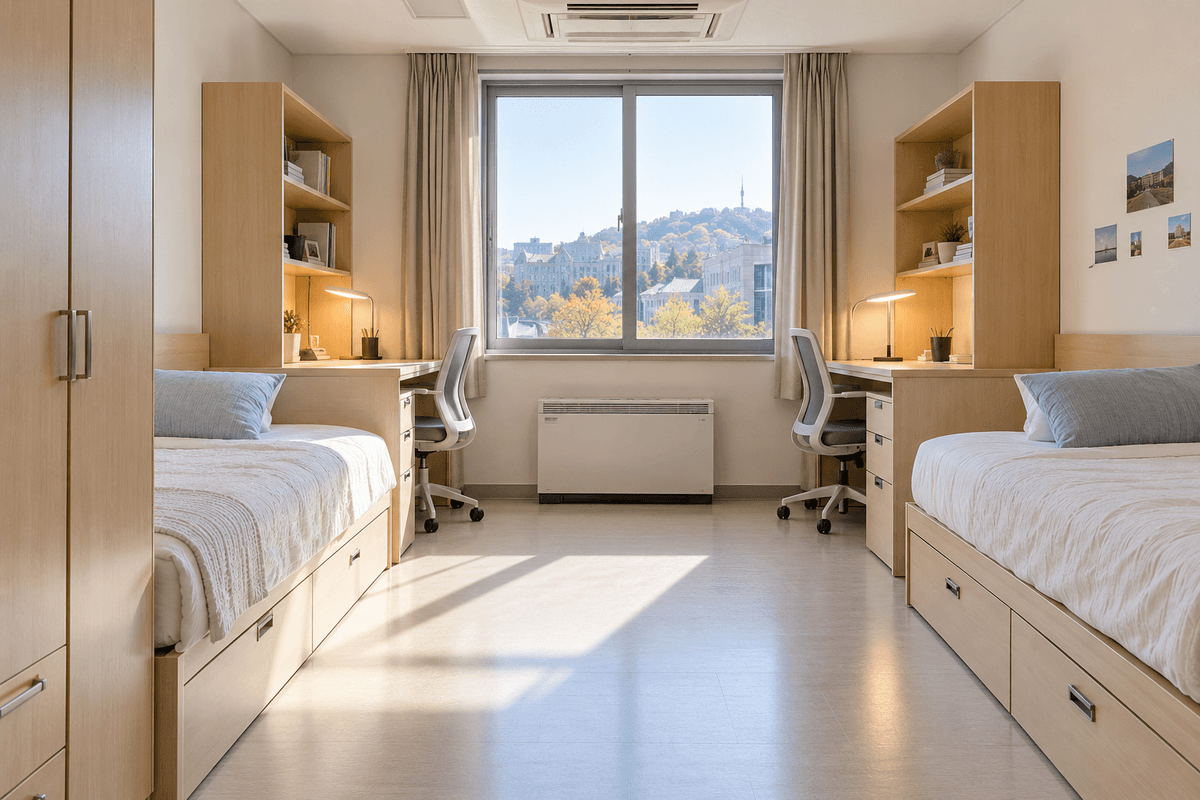
Real Example | Korea University International Dormitories
For its spring 2026 semester, Korea University announced the following housing fees during the second round of additional applications for international dormitories.
Room Type | Fee per Semester |
|---|---|
Single room | KRW 2,460,000 |
Double room | KRW 1,906,500 |
Frontier Hall double room | KRW 1,771,200 |
Applications were accepted from January 13 to 16, and admission results were announced on January 23.
Accepted students were required to pay their dormitory fees between January 23 and February 3, while the residence period ran from February 20 to June 23.
Unlike studio apartments, where rent is typically paid monthly, dormitories may require students to pay for an entire housing period in advance.
That's why it's important to consider not only the total cost but also when the payment is due.
Things to Keep in Mind
Dormitories may have rules about curfews, visitors, and cooking. Application deadlines and required documents also vary by university, so always check your school's official housing announcements before applying.
2. Studio Apartments (One-Rooms) | Prefer Privacy and Independence?
Imagine coming home after class and having your own space to cook, study, and relax whenever you want.
A studio apartment, commonly called a one-room (원룸) in Korea, is a great option for international students who value privacy and independence.
Most studios combine the bedroom and living area into one space, with a private kitchen and bathroom. One of the biggest advantages is being able to follow your own schedule without adjusting to roommates.
However, you'll also be responsible for managing your home, and the upfront costs can be higher than those of dormitories or some shared housing options.
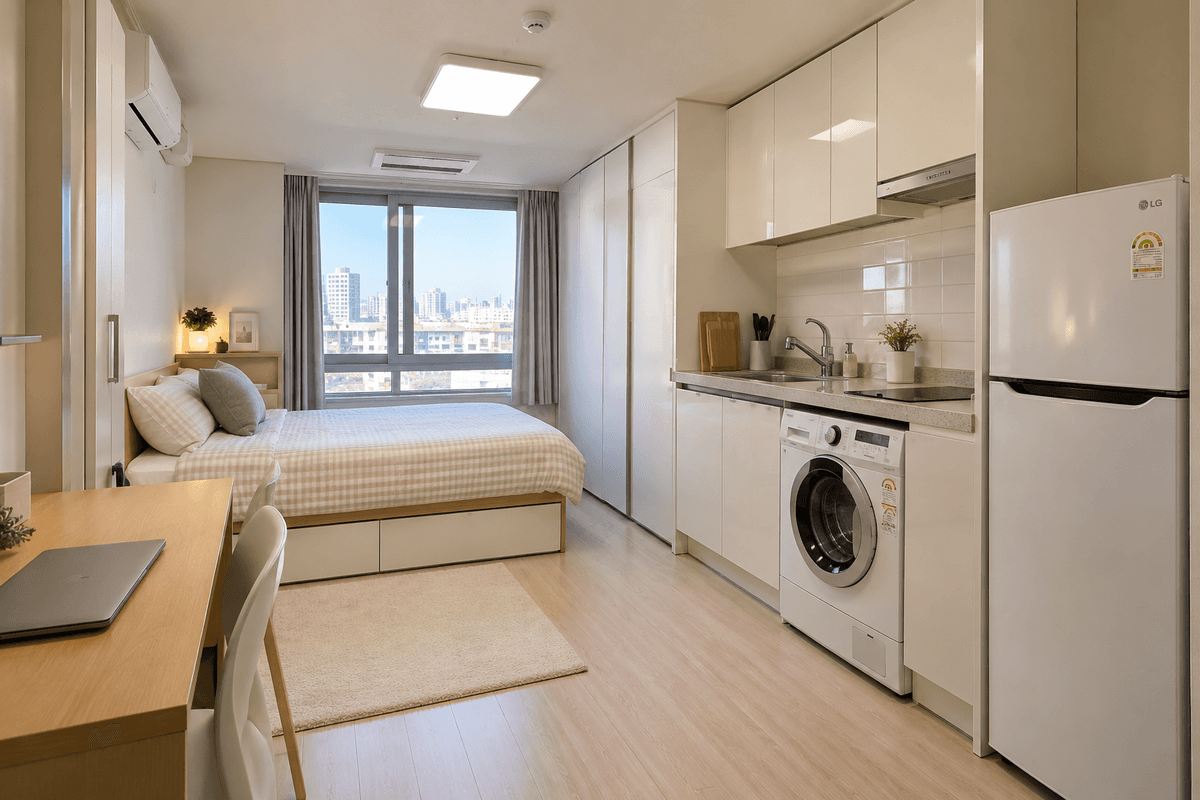
Example | Is KRW 600,000 in Monthly Rent Really Enough?
Let's say you find a studio apartment advertised at KRW 600,000 per month.
Expense | Amount |
|---|---|
Security deposit | KRW 5,000,000 |
Monthly rent | KRW 600,000 |
Monthly maintenance fee | KRW 70,000 |
Total basic monthly housing cost | KRW 670,000 |
This is a hypothetical example to illustrate how rental costs work in Korea.
Although the advertised rent is KRW 600,000, your basic monthly housing cost would actually be KRW 670,000 once the maintenance fee is included. Electricity, gas, and internet may cost extra.
Another important part of renting in Korea is the security deposit, known as bojeunggeum (보증금).
This is a lump sum paid at the beginning of the lease, which is generally returned when the lease ends, subject to the contract terms and any applicable deductions. Because deposits can be substantial, you'll need to budget for more than just your monthly rent.
Things to Keep in Mind
Check what's included in the maintenance fee and whether appliances such as a refrigerator and washing machine are provided.
Before signing a lease, verify the property owner's identity and review the property's official real estate registry (deunggi-bu-deungbon, 등기부등본) for ownership and registered claims. It's also important to understand the lease term and what happens if you need to move out early.
3. Goshiwons | Looking for a Budget-Friendly Place to Stay?
When you first arrive in Korea, managing your living expenses may be one of your biggest concerns.
Between tuition, food, and transportation, finding affordable accommodation can make a real difference. That's where a goshiwon (고시원) comes in.
A goshiwon is a type of compact accommodation in Korea, typically offering a small private room with basic furniture such as a bed and desk.
Some goshiwons require little or no security deposit and offer relatively flexible stays, making them worth considering if you want to keep your initial housing costs low.
The trade-off is space. Rooms are usually quite small, and depending on the property, you may need to share bathrooms or showers with other residents.
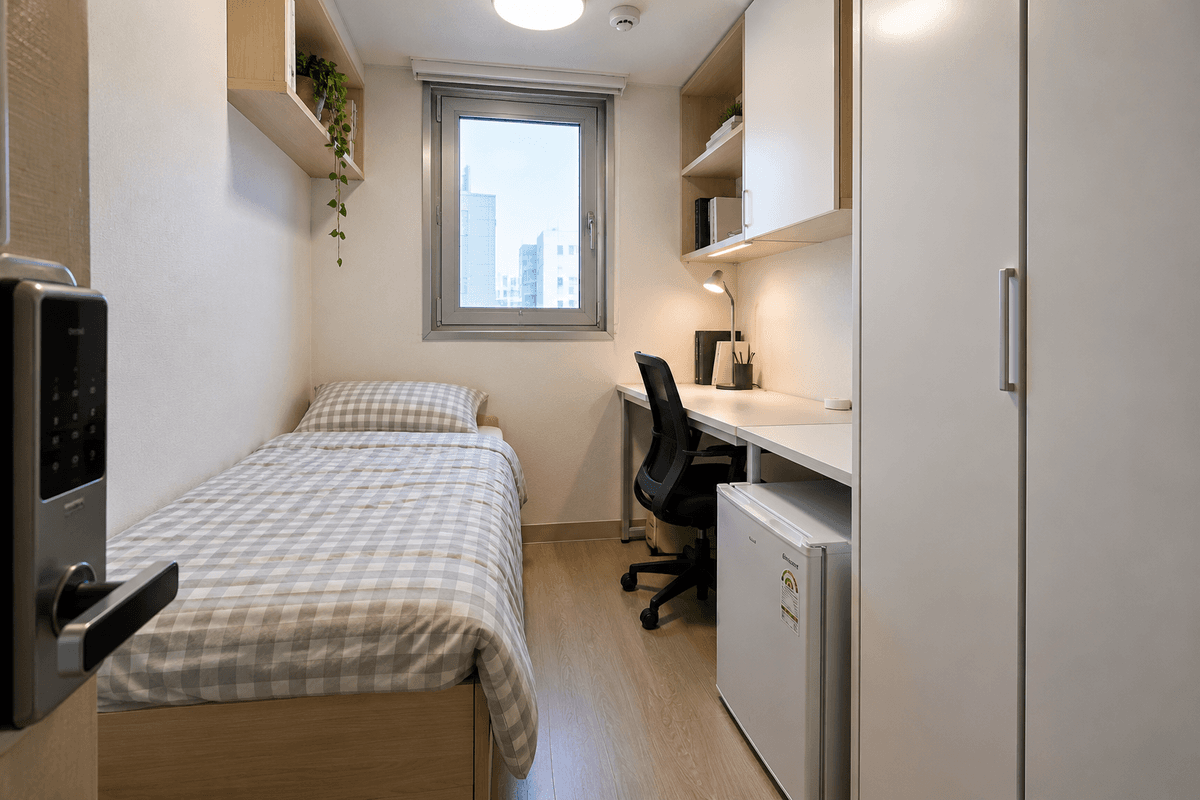
Example | Not All Goshiwon Rooms Are the Same!
When browsing goshiwon listings, you'll notice that facilities can vary significantly.
Some rooms include only a bed and desk, with shared toilets and showers down the hall. Others come with a private bathroom.
Windows are another important detail. A room with an exterior window may offer better natural light and ventilation than one without.
Instead of simply choosing the cheapest room, think about which living conditions you're comfortable with and what matters most to you.
Things to Keep in Mind
Check the soundproofing, ventilation, cleanliness of shared facilities, and fire safety features, including emergency exits.
You may also need proof of your residential address when applying for foreign resident registration in Korea. Before booking, ask whether the property can provide the documents required to verify your address.
4. Share Houses | Want to Meet People and Live Together?
Moving to a new country can be exciting, but it can also feel lonely at first.
A share house is a home where several residents live together and share common spaces such as the kitchen and living room.
Depending on the arrangement, you may have your own bedroom or share one with another resident. Sharing a home gives you opportunities to cook, chat, and spend time with other people.
For international students who enjoy meeting new people and experiencing communal living, a share house can be a great fit.
However, sharing a home also means respecting different schedules and habits. Cleaning, noise, and the use of shared spaces can sometimes become sources of disagreement.
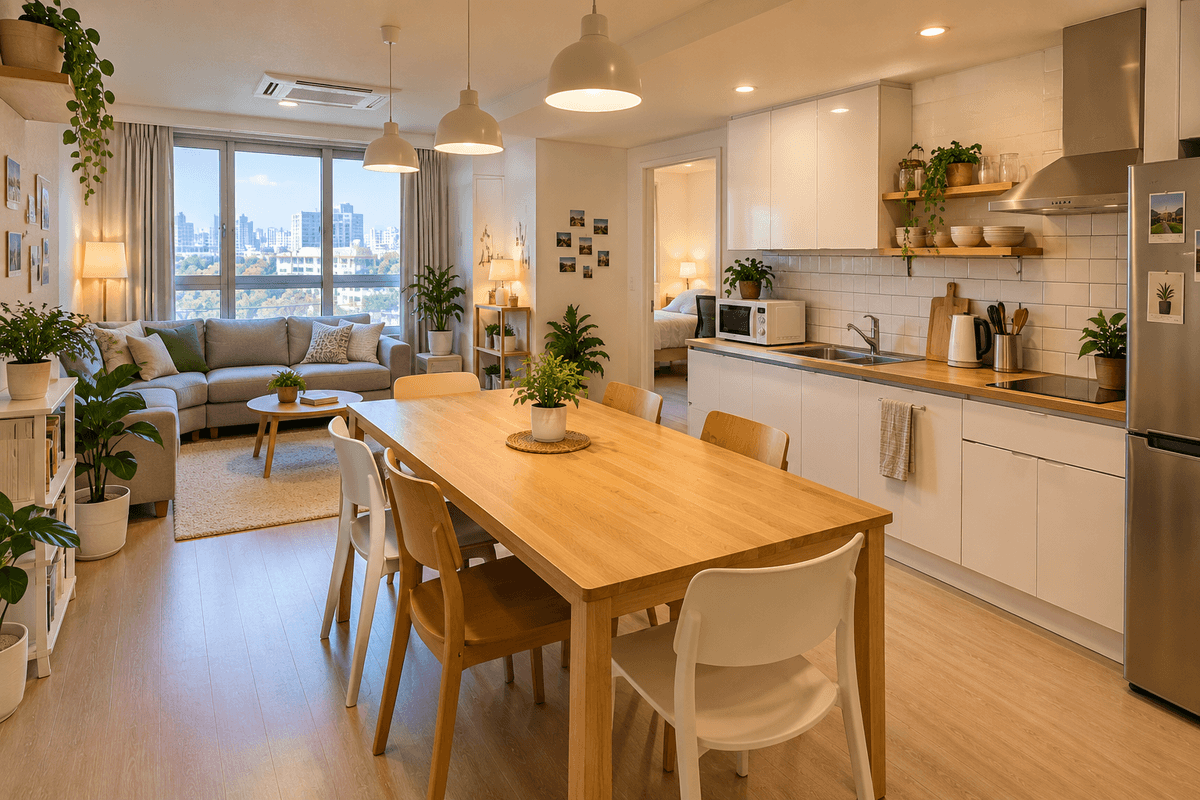
Real Example | A Share House Near Korea University
In August 2026, a share house near Korea University Station was advertised on a Korea University student community website with the following prices.
Room Type | Security Deposit | Monthly Rent |
|---|---|---|
Private room | KRW 480,000 | KRW 480,000 |
Shared room – lower bunk | KRW 400,000 | KRW 400,000 |
Shared room – upper bunk | KRW 380,000 | KRW 380,000 |
These were the advertised rates at the time of posting. Current prices and availability may differ.
As this example shows, housing costs can vary even within the same share house, depending on whether you have a private bedroom or share a room with someone else.
The listing also stated that utility bills would be divided among residents, so it's important to account for expenses beyond the advertised rent.
Things to Keep in Mind
Ask how many people share the kitchen and bathroom, how cleaning responsibilities are divided, and how utility bills are calculated.
It's also worth checking the house rules for visitors and noise, along with the lease period and deposit refund conditions if you need to move out early.
Finding Your First Home in Korea: Choose What Works for You
There's no single housing option that's perfect for every international student.
If living close to campus is your top priority, a dormitory may be the best fit. If you value privacy and independence, consider a studio apartment. If keeping costs down matters most, a goshiwon may be worth exploring. And if you'd like to meet new people, a share house could be a great choice.
The key is to look beyond the price and choose a place that fits both your budget and your lifestyle.
Looking for a place to stay in Korea? Explore different accommodation options on Homes in Korea and find a home that suits your needs.
Your study abroad experience starts with finding a place where you can feel at home!
Sources & References
Share House Price Example
Korea University Student Community (Koreapas), August 2026
https://www.koreapas.com/m/view.php?back=1&id=house&no=215245&page=1&tagkeyword=
Image Credits
All four housing images (university dormitory, studio apartment, goshiwon, and share house) were generated using OpenAI's ChatGPT. They are AI-generated illustrations and do not depict actual properties.
You might also like