Why Is There No Line Outside, Yet a 2-Hour Wait?
Imagine walking down a trendy street in Seongsu, Hongdae, or Yeonnam-dong. You spot a famous brunch cafe or bakery you’ve seen all over social media. Looking at the entrance, there is no long line of people standing outside—so you walk right in. Yet the staff stops you and says, "Sorry, there is currently a 2-hour wait."
Welcome to Korea’s smart queue culture.
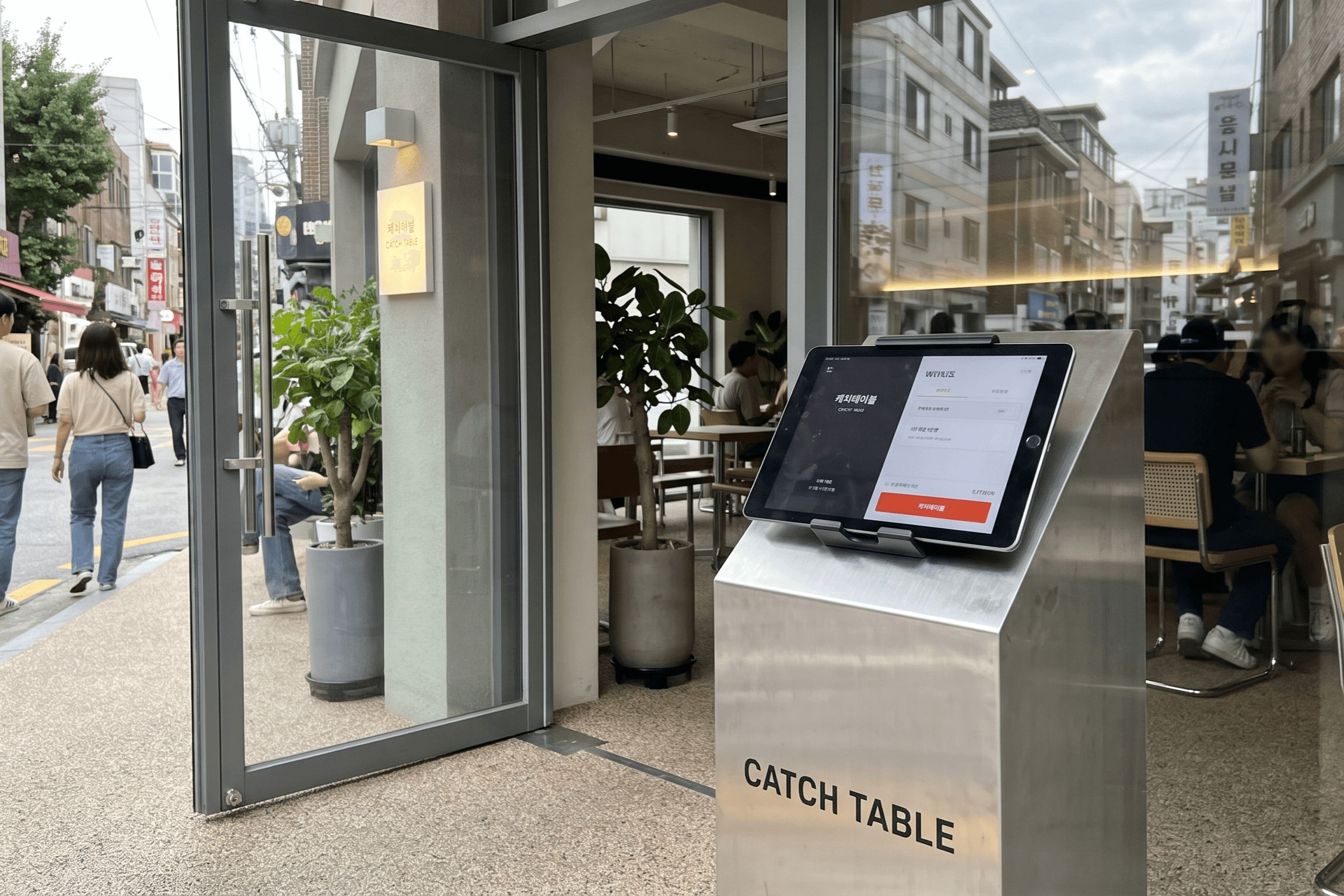
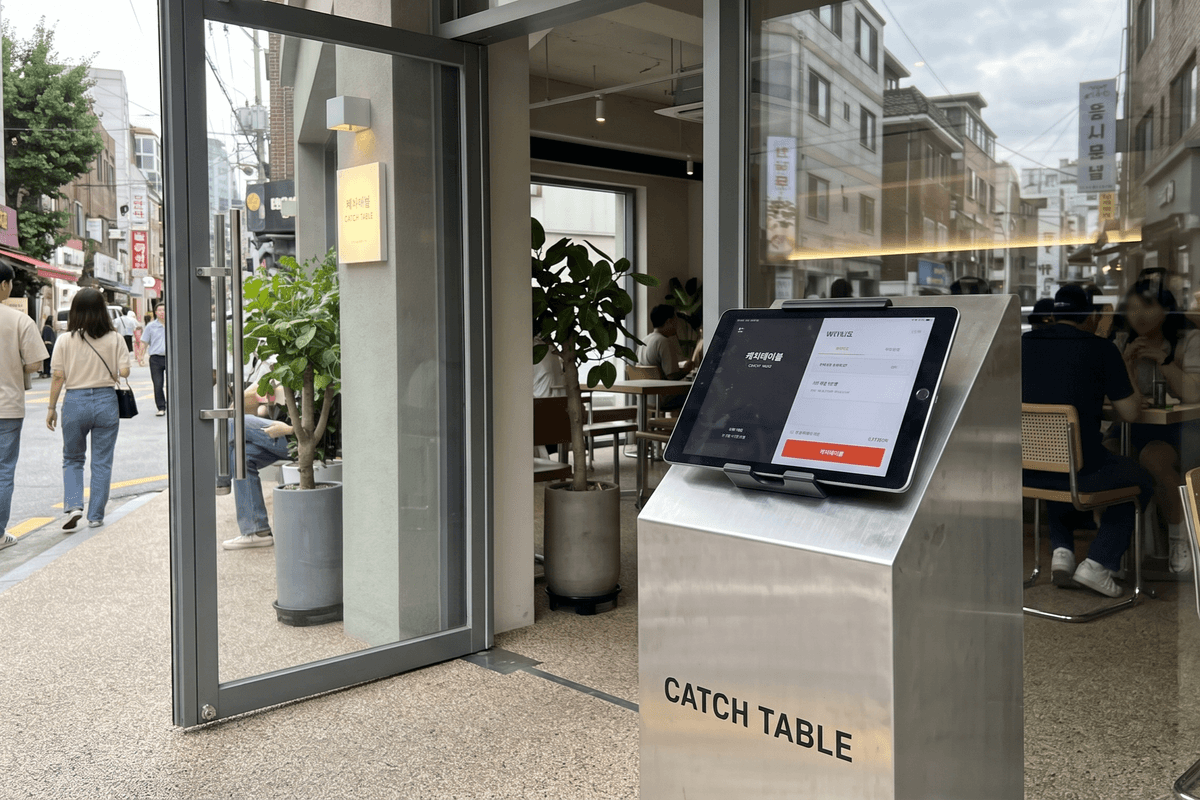
In Korea, standing physically in line outside a restaurant has largely disappeared. Instead, you will notice a sleek iPad or tablet stand right next to the entrance. Locals simply tap their phone number onto the screen, receive a digital queue number, and freely explore nearby shops or grab a coffee until a message notifies them that their table is ready.
While this system is super convenient, it often becomes an unexpected wall for international students and short-term visitors who do not yet have a Korean phone number (010-XXXX-XXXX). Here is everything you need to know to navigate Korea’s digital waitlist like a local.
How Korea’s Digital Queue System Works (Catch Table)
The undisputed leader behind almost all those iPad stands in Seoul is Catch Table (캐치테이블), Korea’s primary restaurant reservation and waiting platform.
For locals, the process follows three simple steps:
- Register on the Tablet (or App): Enter a Korean phone number and party size at the kiosk outside the restaurant.
- Track in Real Time: Receive an instant KakaoTalk notification with a live link showing how many teams are ahead.
- Return on Call: Walk back to the restaurant only when a final alert notifies them to enter.
The #1 Hurdle for Foreigners: No Korean Phone Number (010)
When international newcomers try to use the standard domestic tablet at the door, they usually run into two immediate roadblocks:
- The
010Number Requirement: The default domestic interface asks for a Korean mobile number starting with010to send KakaoTalk alerts. Without a Korean SIM card or local number, the keypad won't let you proceed. - Korean-Only Default Screens: Many kiosks are set to Korean by default, making it easy to accidentally press the wrong button or miss where the language toggle is hidden.
(Note: Make sure not to download the domestic Korean version of Catch Table, as it requires Korean telecom identity verification. Always use the global version detailed below.)
3 Easy Ways for Foreigners to Join the Waitlist
You don't need a Korean phone number to eat at Seoul's hottest spots. Use any of these three methods to get on the list:
Method 1: Use the ‘Catch Table Global’ App (Remote Waiting & Email Alerts)
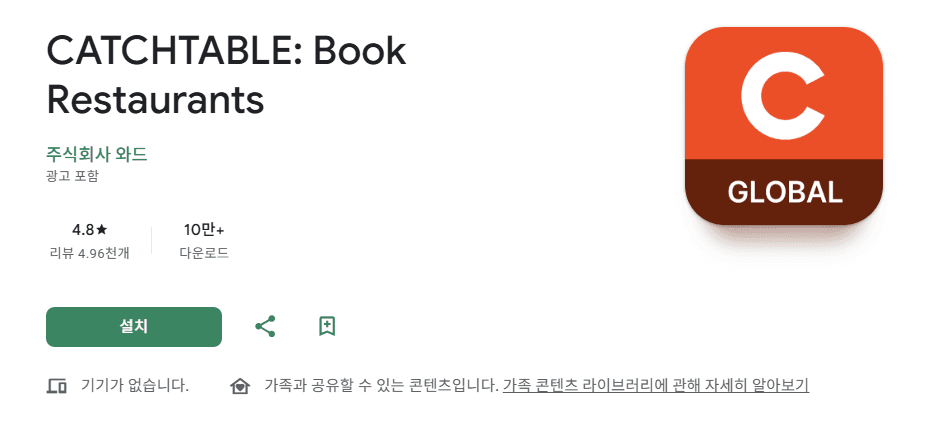
Catch Table operates a dedicated international app called Catch Table Global (search for CATCHTABLE : Book Restaurants on the App Store or Google Play).
- No Korean Number Needed: You can sign up easily using your Google account, Apple ID, or international email address.
- Get Alerts via Push & Email: Instead of KakaoTalk, your queue status and entry alerts are sent directly through app push notifications and email.
- Remote Waiting (원격 웨이팅): For popular spots, you don't even have to visit the restaurant first. Check if the restaurant offers "Join Remote Waitlist" in the app so you can line up virtually from your room or subway ride before arriving.
Method 2: Check the ‘Email / Foreign Number’ Option on the Tablet
If you walk up to a restaurant without the app, look closely at the iPad kiosk at the door:
- Switch the Language: Look at the top right or bottom corner of the screen for a globe icon or language tab (English / 日本語 / 中文).
- Select Email or Foreign Number: Once switched to English, many Catch Table kiosks unlock an option to enter your email address or international phone number instead of a
010number. Complete your registration and check your inbox for your queue ticket.
Method 3: Ask the Staff Directly with a Ready-to-Show Phrase
Older kiosks or partner systems (such as Tabling) occasionally lack an English email option on the front screen. If the tablet won't accept your information, don't walk away—restaurant staff can almost always manually add you to the system from their inside POS tablet.
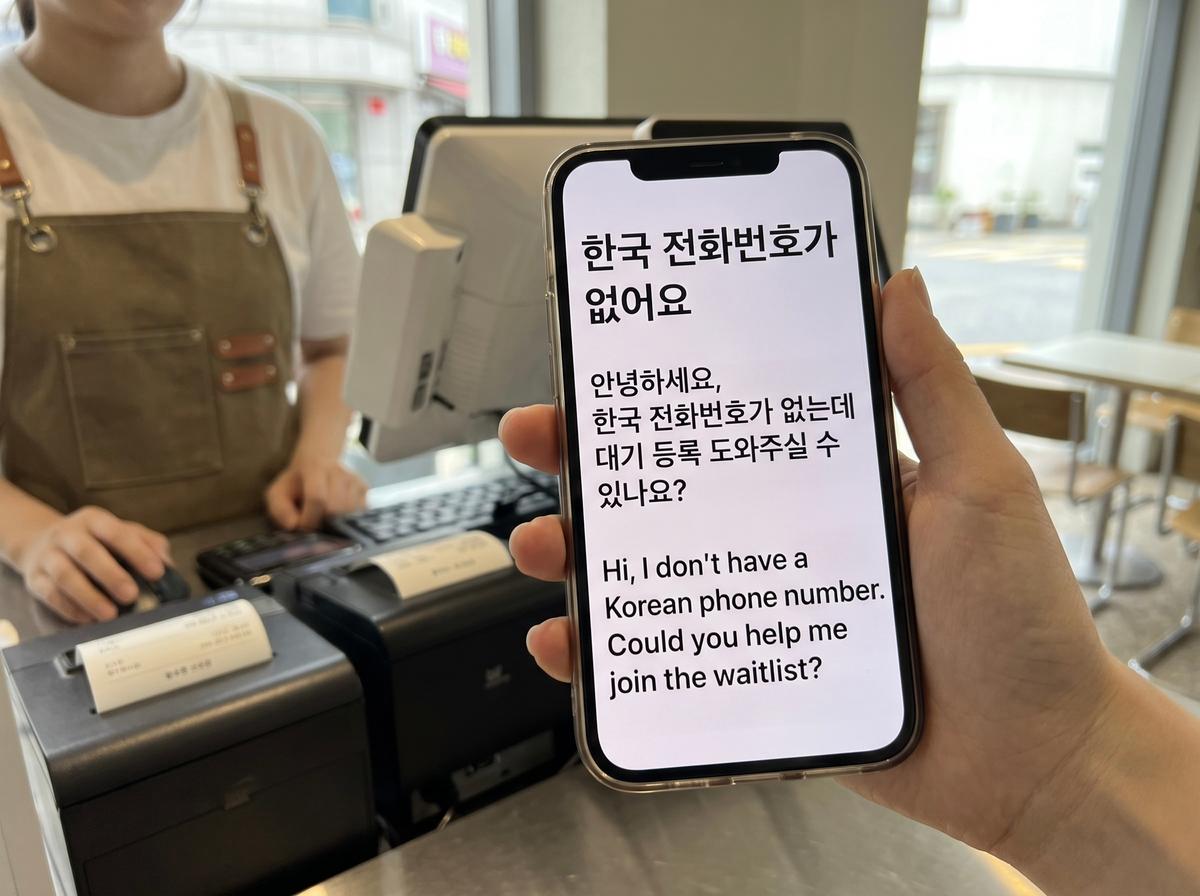
Simply walk up to the counter and show this card on your phone screen:
🇰🇷 한국어 (Show to Staff)
"안녕하세요, 한국 전화번호가 없는데 대기 등록 도와주실 수 있나요?"
(성인 ___명입니다. 가게 앞에서 기다리겠습니다.)
🇺🇸 English
"Hi, I don't have a Korean phone number. Could you help me join the waitlist?"
(Party of ___. I will wait near the entrance.)
Pro Tips for a Smooth Dining Experience in Korea
- Stay Within 5 Minutes of the Restaurant: Once your number is called, most Korean restaurants only hold your table for 5 to 10 minutes. If you miss the call, your spot is automatically canceled, so stay close once there are 3 to 5 teams ahead of you.
- Watch Out for ‘Break Time’ (3:00 PM – 5:00 PM): Unlike many Western restaurants that stay open all afternoon, most trendy Korean eateries close between 3:00 PM and 5:00 PM to prep for dinner, with the afternoon Last Order often ending around 2:00 PM or 2:30 PM. Always check the break time before heading out.
- Beat the Rush: Peak dining hours in Seoul are 12:00 PM – 1:30 PM for lunch and 6:00 PM – 8:00 PM for dinner. Arriving right at opening time (usually 11:30 AM) often lets you walk straight in with zero wait.
Settling Into Seoul Without the Hassle
Once you get the hang of Korea’s smart queue culture, exploring Seoul’s food scene becomes effortless—no more wasting precious hours standing out in the cold or heat.
Looking for a smooth, hassle-free start to your stay in Korea? Whether you are an exchange student or staying short-term in Seoul, Homes in Korea helps you find verified, foreigner-friendly housing with transparent contracts and zero language barriers—so you can spend less time worrying about logistics and more time enjoying local life.