

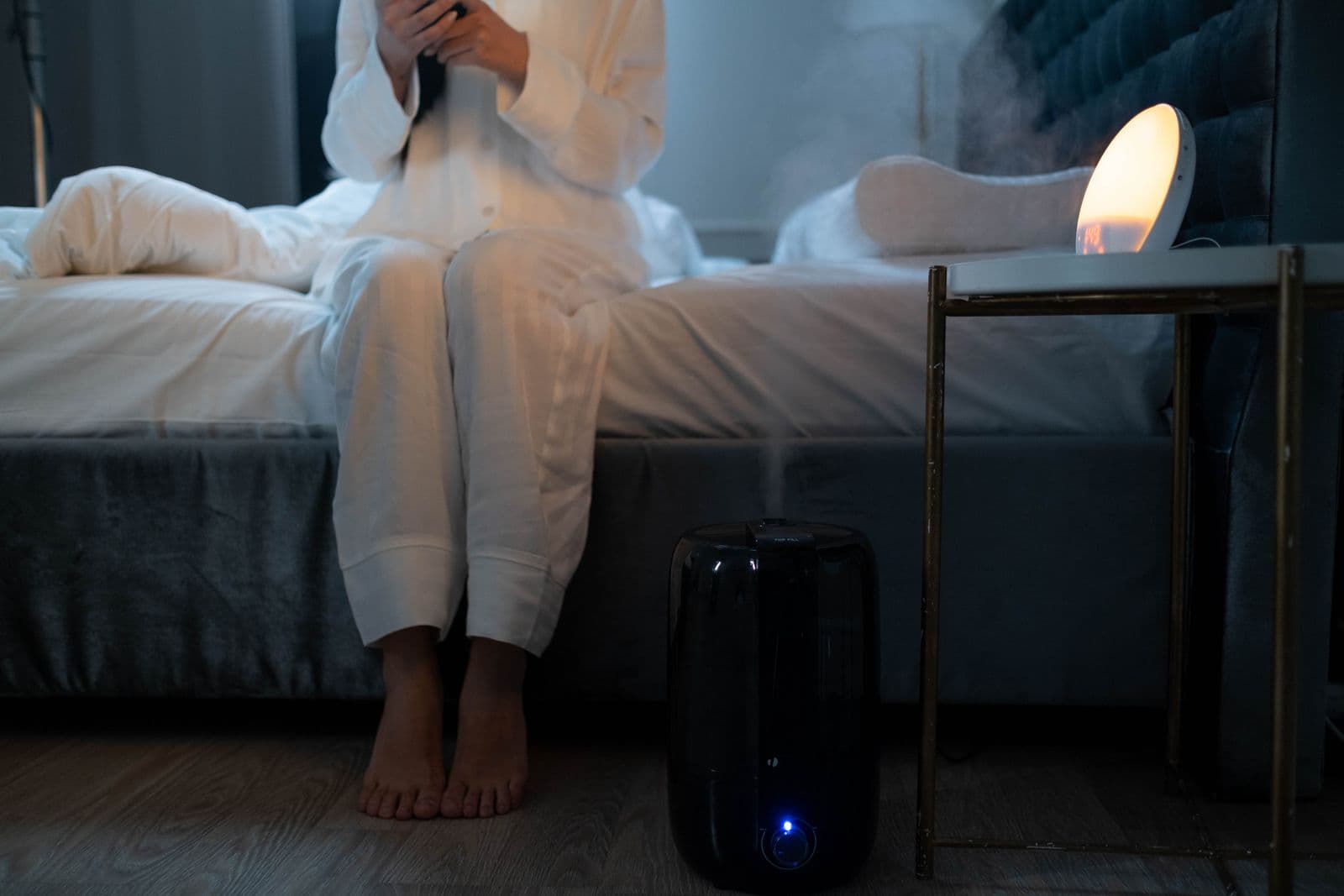
Winter in a Korean apartment has a strange quirk. You wake up with a dry throat and static in your hair, then open the curtains and find water running down the windows. Both problems are real, and they happen in the same room at the same time.
This guide isn't a shopping list for winter (we've already covered that). It's about how to actually live with ondol (온돌) floor heating, a humidifier, and closed windows for three or four months without ending up with a sore throat or black spots behind your wardrobe. We'll also cover what to do if mold shows up, because it can affect your deposit.
Why your apartment is dry and wet at the same time
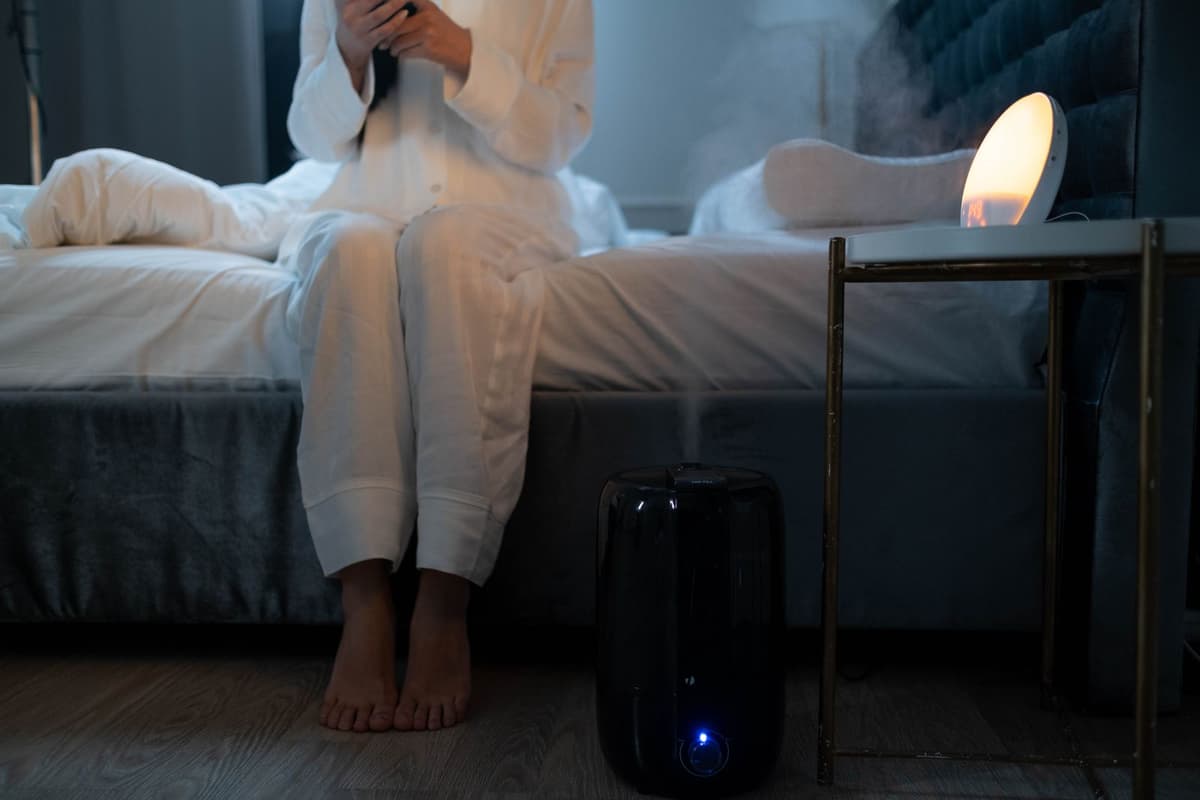
Korean winters are cold and dry. Cold air holds very little moisture, so when it gets heated indoors, the relative humidity drops. Ondol heating warms the whole room evenly, which feels great, but it also leaves the air very dry. A lot of people notice it most when they sleep on a heated floor with the boiler (보일러) running all night.
Meanwhile, you're adding moisture all day: cooking, showering, breathing, and drying laundry on a rack indoors (very common in Korea, since many homes don't have a dryer). That warm, moist air hits the coldest surfaces in your home, like window glass, aluminum frames, and exterior walls, and turns back into water. That's condensation, called gyeolro (결로) in Korean.
So condensation in Korean apartments doesn't necessarily mean your air is too humid overall. Usually it means your room is much warmer than your windows and the moisture has nowhere to go. Older buildings, poorly sealed windows, studio rooms (원룸) where the kitchen and bed share one space, and semi-basement units (반지하) tend to get it the worst.
💡 Tip: If you view a place in winter and see heavy condensation or stains around the window frames, ask the landlord or agent about it before you sign. It's much easier to ask now than to argue later.
Measure first: get a cheap hygrometer
Before you buy anything big, find out what's actually happening in your room. A digital thermo-hygrometer (온습도계) shows temperature and humidity. Basic ones are easy to find at Daiso and household goods shops, usually for a few thousand won. Prices vary by model, so check in store.
A commonly recommended indoor range is roughly 40–60% relative humidity. Go below that and you'll feel it in your nose, eyes, and skin. If it stays above that range all winter, condensation and mold get much more likely.
- Check at different times. Look in the morning, after cooking, and after a shower. In a small room, humidity can swing a lot within one day.
- Keep it away from the humidifier. Right next to the mist, it'll show a misleadingly high number. Put it across the room at about bed height instead.
- Watch the windows too. If the hygrometer says 45% but your windows are soaked every morning, the real problem is cold glass and poor airflow. Your overall humidity is fine.
Choosing and using a humidifier (가습기)
In winter, humidifiers are everywhere in Korea: electronics stores, supermarkets like E-mart and Homeplus, Daiso (mostly small USB models), and shopping apps like Coupang. Here are the main types you'll see.
The main types
- Ultrasonic (초음파식): Affordable, quiet, and easy to find. It uses vibration to make a cool mist. The downsides: tap water can leave white mineral dust on furniture, and because the water isn't heated, the tank needs frequent cleaning.
- Heated / steam (가열식): Boils water into steam, so it's more hygienic and doesn't spread mineral dust. On the other hand, it uses more electricity and the steam is hot, so think about placement if you have kids or pets.
- Evaporative / natural (자연기화식): A fan blows air through a wet filter. There's no visible mist and it's hard to over-humidify with one, but the filter needs regular cleaning or replacement.
- Hybrid (복합식): Combines two methods, often ultrasonic plus heating. It's a middle ground and usually costs more.
For a typical studio, a small ultrasonic or evaporative model is usually enough. Prices change a lot by brand and season, so compare a few options in store or on an app. As a rough guide, basic models tend to be affordable, while heated and evaporative models usually cost more.
Use it without creating condensation
- Don't aim it at windows or walls. Put it near the middle of the room, raised off the floor on a stool or table, and away from your bed and electronics.
- Run it on low or with a target humidity. Many models have an auto mode. Running one on max all night in a small, closed room is a quick way to get dripping windows.
- Turn it off when you ventilate or leave. There's no point humidifying air you're about to swap out.
Cleaning matters (a lot)
Empty the tank every day, rinse it, and let it air-dry. Every few days, give it a proper clean following the manual. Many people use a soft brush and diluted citric acid or vinegar for mineral scale, then rinse thoroughly.
One important rule: never add disinfectant or "humidifier sterilizer" chemicals to the water. Korea had a serious public health disaster involving humidifier disinfectants, which came to light in 2011, and many Koreans still take it very seriously. Clean the tank, rinse it well, fill it with fresh water. That's all it needs.
💡 Tip: No humidifier yet? Hang a damp towel or a rack of wet laundry in your room overnight. It's the classic Korean dorm hack, and in a small room it works surprisingly well.

Condensation and mold: the winter window problem
If you wake up to dripping windows, deal with it that morning. Water left on the frame and sill soaks into silicone, wallpaper, and curtains, and that's where mold (곰팡이) starts. It usually shows up as small black dots in corners, behind furniture, or along the window seal.
- Wipe the windows every morning. A squeegee or dry towel takes two minutes. Plenty of Korean households keep a cloth by the window just for this in winter.
- Open the curtains during the day. Thick curtains trap cold, damp air against the glass. Open them so the glass can warm up and dry out.
- Keep furniture off exterior walls. Leave a few centimeters between exterior walls and your bed, wardrobe, or shelves. Those walls are colder, and mold loves the still air behind furniture.
- Use moisture absorbers in closets. Disposable dehumidifier boxes are sold at supermarkets and Daiso. The best-known brand is Mulmeokneun Hama (물먹는하마, "the water-drinking hippo"). Put them in wardrobes, under the sink, and in the shoe cabinet (신발장).
- Try window insulation. Bubble-wrap window insulation, called ppokppoki (뽁뽁이), and anti-condensation tape (결로방지 테이프) are common renter-friendly fixes. Ask your landlord before sticking on anything that might leave residue.
- Don't switch the heating off completely. If the boiler is fully off while you're out, the room gets very cold, and the condensation is worse when you come home and heat it up again. Many boilers have an away mode (외출 모드) that keeps a low temperature.
If you already see mold
Small spots on tiles, silicone, or window frames can usually be handled with a mold remover spray (곰팡이 제거제) from the supermarket. Ventilate well, wear gloves, and follow the label. Never mix bleach-based products with acidic cleaners like vinegar, because the combination can release toxic gas.
If the mold is on wallpaper, spreading across a wall, or coming back quickly after cleaning, don't just scrub harder or cover it up. That often points to a leak, an insulation problem, or a structural cold spot, and your landlord needs to know about it.
📍 Where it shows up first: window corners, the bottom of curtains, behind the headboard, inside wardrobes against exterior walls, bathroom ceilings and silicone, and expanded balcony areas (확장형 베란다) that used to be outdoor space.
Ventilation (환기) habits that actually work
Opening a window when it's freezing outside feels wrong, but short bursts of ventilation are one of the best ways to control condensation. A few minutes of swapping humid indoor air for dry outdoor air lowers the moisture without cooling down the walls and floor much.
- Short and wide beats long and cracked. Many Korean households open the windows fully for around 10 minutes a few times a day, instead of leaving one open a crack for hours. Opening windows on opposite sides creates a cross-breeze and gets it done faster.
- Ventilate right after moisture spikes. The best times are right after cooking, showering, or hanging laundry.
- Use your fans. Turn on the range hood while you cook and leave the bathroom exhaust fan running for a while after showers. If your layout allows, leave the bathroom door open afterward too.
- Check fine dust before opening up. Fine dust (미세먼지) levels can be high in winter and spring, so check an app like AirKorea (에어코리아) or your weather app first. On bad days, keep it short. But if your windows are soaked, don't skip it entirely. Lean on the range hood and bathroom fan.
Some newer apartments have a built-in mechanical ventilation system (환기 시스템) with a control panel on the wall. If yours does, ask the landlord or the management office (관리사무소) how it works and whether the filters need changing.
Mold, your landlord, and your deposit
Mold isn't just annoying. It can turn into an argument about your deposit (보증금) when you move out. Who's responsible usually depends on the cause: a leak or building defect is a different story from damage caused by never ventilating. Since this often ends up disputed, your best protection is good records and reporting problems early.
- Photograph everything at move-in. Window frames, corners, bathroom silicone, the inside of closets. Keep the dated photos somewhere safe. If you're about to move in, do this on day one.
- Report problems early and in writing. Send your landlord or agent a short message with photos, for example on KakaoTalk: "Mold is appearing near the window frame even though I wipe and ventilate daily. Could you take a look?" Written messages are easier to point back to than phone calls.
- Show what you've been doing. Mention that you ventilate, wipe the windows, and use moisture absorbers. That helps show the problem didn't come from neglect.
- Ask before any big fixes. Don't replace wallpaper or silicone yourself without agreeing on it first, or it could become a separate issue at move-out.
If you're house hunting this winter, check the windows and corners carefully at each viewing. You can compare listings by neighborhood on the Homes in Korea map, and there are more renting tips on our blog.
A simple daily winter routine
- Morning: Wipe off condensation, open the curtains, and ventilate for about 10 minutes.
- Daytime: If you're out, put the boiler on low or away mode. Empty the humidifier tank and let it dry.
- Evening: Ventilate after cooking and showering, and run the bathroom fan.
- Night: Refill the humidifier with fresh water, set it to low or auto, and keep it away from windows and walls.
- Weekly: Clean the humidifier properly, check closets and corners for spots, and replace any full moisture absorbers.
If the dryness still bothers you after all this (nosebleeds, a cough that won't go away, irritated skin), see a doctor or ask a pharmacist. Our guide to seeing a doctor in Korea as a foreigner on the Homes in Korea blog explains how clinics and pharmacies work.
Looking for a place with better windows, good sunlight, and fewer winter surprises? Find a home on Homes in Korea and compare listings before you sign.