
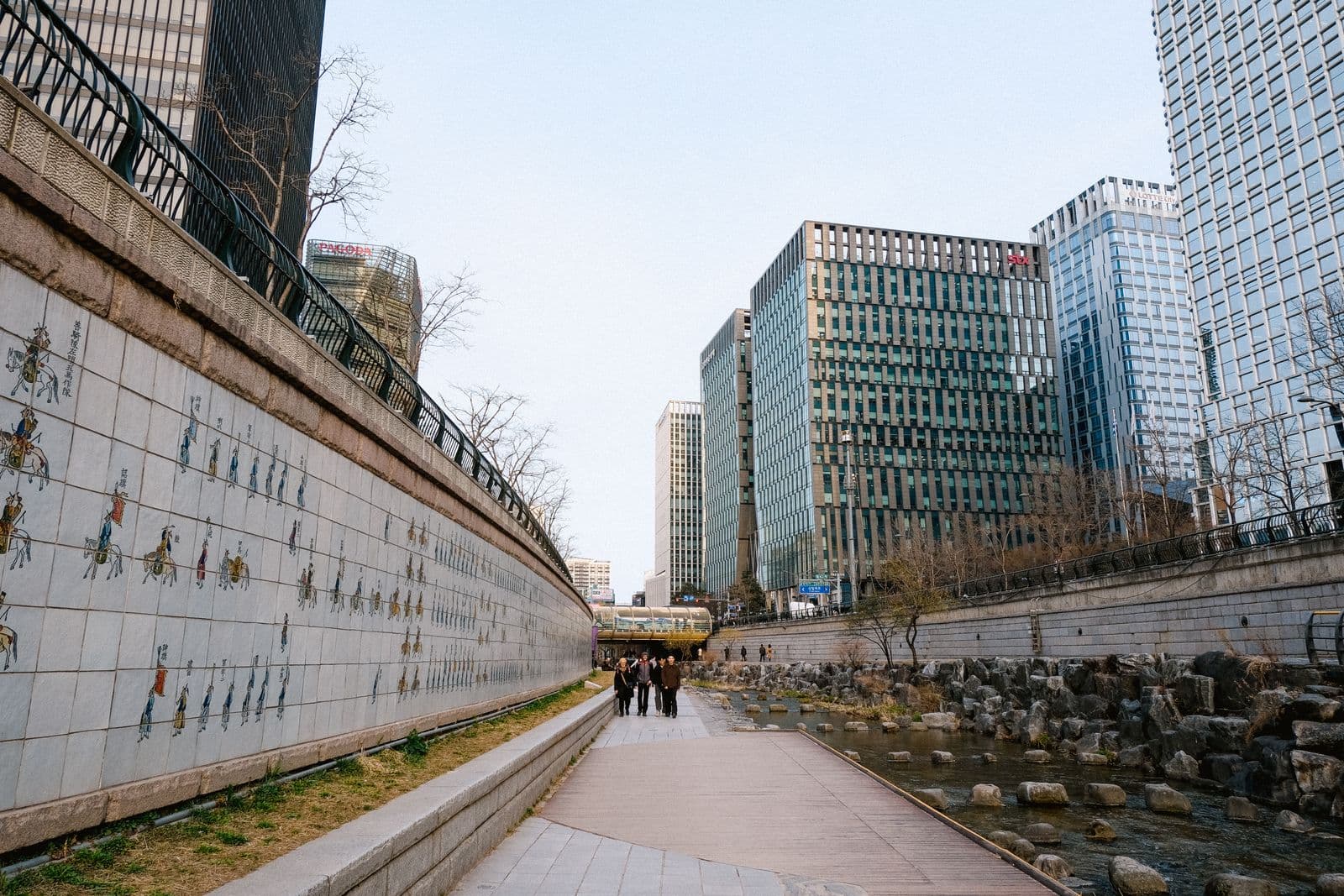
Yes, your first Korean winter will be cold. It's also when Seoul looks its best. From late autumn, streams, department stores, and plazas start lighting up, and at some point the city gets its first snow, cheotnun (첫눈). Koreans treat that first snowfall as a small, slightly romantic event.
This guide covers where to see winter illuminations in Seoul and just outside the city, plus where to go when the first flakes fall. Most spots are reachable by subway, so you can go on a weeknight after class or work without planning a whole trip around it.
If you've already read our guide on getting ready for your first winter, think of this as the fun part: where to actually go once you're bundled up. You'll find more guides on living in Korea on the Homes in Korea blog.
When Do the Lights and the First Snow Arrive?
The lights don't all switch on at once. Here's the usual order, roughly:
- Department stores usually reveal their Christmas facades and indoor displays around mid-November.
- City-run festivals around Cheonggyecheon and Gwanghwamun have often run from November or December into January in recent years.
- Light gardens outside Seoul often run their lighting festivals from around early December all the way to early spring.
Dates and programs change every year. Before you go, check the official website or Instagram account for each event, especially for anything that needs a booking.
The first snow, cheotnun (첫눈)
Nobody can tell you the date in advance. Seoul's official first snow is recorded when observers at the city's weather station see snow falling. A few flakes count, even if nothing sticks to the ground. It often comes sometime in late November or December, but it changes from year to year.
When it happens, expect your Korean friends' group chats to light up. Couples promise to meet on the day of the first snow, and there's an old folk belief that if the balsam-flower dye on your nails, bongsunga mul (봉숭아 물), lasts until the first snow, your first love will come true. It's a small, sweet cultural moment, and a good excuse to go outside.
💡 Turn on weather notifications in Naver Weather or the Korea Meteorological Administration (기상청) app. Forecasts will warn you when snow is likely, so you can plan a morning walk before it melts.
Downtown Lights You Can Reach by Subway
The old downtown area (Gwanghwamun, City Hall, Myeongdong) is the easiest place to start. The main spots are close enough to walk between in a single evening.
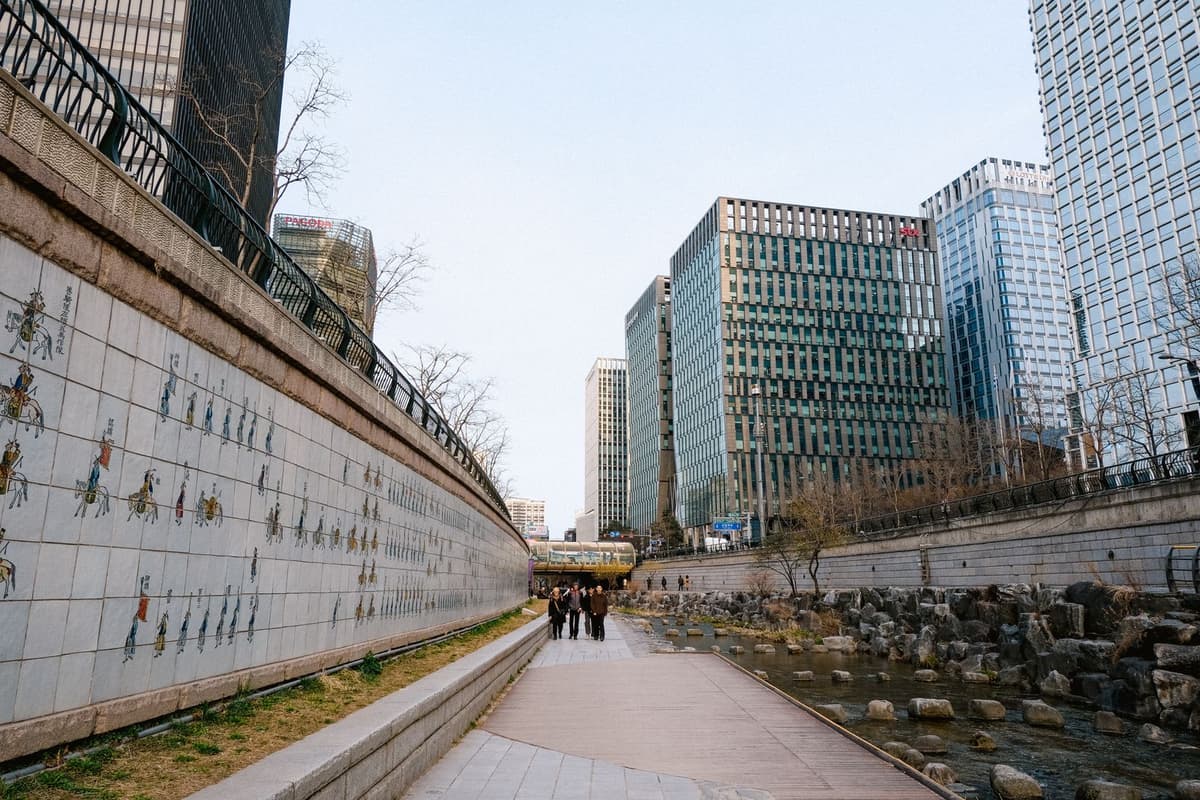
- Cheonggyecheon Stream (청계천): This restored stream runs east from Cheonggye Plaza and has hosted lantern and light installations in late autumn and winter in recent years, including the Seoul Lantern Festival. Start at the plaza (Gwanghwamun Station, Line 5, or City Hall Station, Lines 1 and 2) and walk downstream.
- Gwanghwamun Square (광화문광장): Recent winters have brought a large tree, light displays, and a seasonal Christmas market to the square, with King Sejong's statue and the mountains behind Gyeongbokgung as a backdrop. It pairs well with Cheonggyecheon.
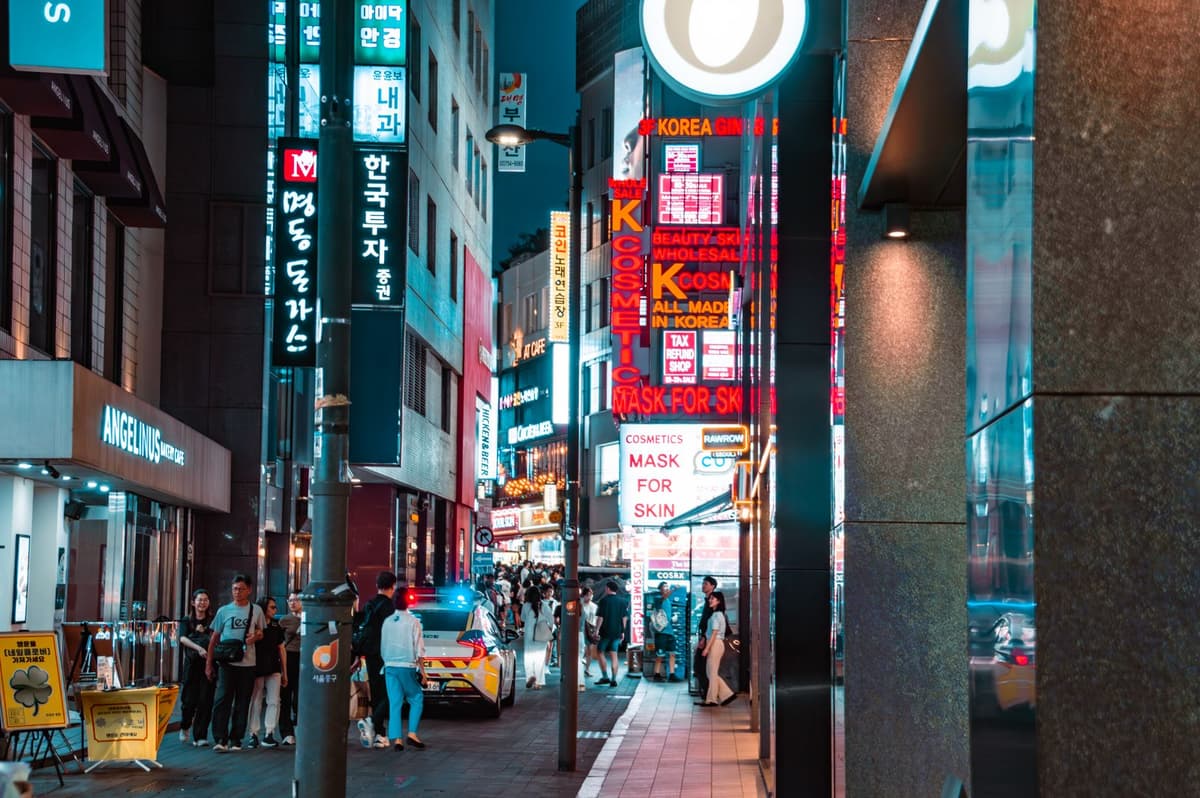
- Myeongdong department store facades: The Shinsegae Department Store main branch (신세계백화점 본점), near Hoehyeon Station (Line 4), has become famous for its huge media-facade Christmas display. Lotte Department Store's main branch nearby decorates too. Expect crowds of people taking photos from across the street.
- Deoksugung Stone Wall Road (덕수궁 돌담길): This one isn't a light show. It's a quiet, lamp-lit path along the palace wall near City Hall, and a nice break from the crowds on a cold night.
📍 Suggested evening route: City Hall Station → Deoksugung Stone Wall Road → Gwanghwamun Square → Cheonggyecheon → Myeongdong. It's all on foot and makes a relaxed evening, with plenty of cafés along the way to warm up.
Malls, Towers, and Lakeside Lights
These spots are good when you want lights plus somewhere warm to duck into: shopping, food, and indoor seating all in one place.
- Lotte World Tower and Seokchon Lake (석촌호수): In recent years, the outdoor plaza at Lotte World Mall has had a big Christmas tree and a small market-style village. Walk part of the lake path afterward for reflections of the tower. Jamsil Station, Lines 2 and 8.
- The Hyundai Seoul (더현대 서울), Yeouido: Its indoor Christmas installation has drawn such long lines that the store used an online reservation system in some recent years. Check the Hyundai Department Store app or website before you go. Yeouido Station, Lines 5 and 9.
- Starfield COEX Mall (스타필드 코엑스몰): The giant bookshelves of the Starfield Library often get seasonal decorations, and the mall is fully indoors. Samseong Station (Line 2) or Bongeunsa Station (Line 9).
- N Seoul Tower (N서울타워) on Namsan: Open year-round, but cold, clear winter nights can give you some of the sharpest city views. Take the Namsan cable car or one of the Namsan circulating buses rather than walking up in the dark.
💡 Keep an indoor spot as your Plan B. Some nights the wind off the Han River makes standing outside miserable, and a mall display still gives you the Christmas mood without the frostbite.
Day Trips: Light Gardens and Snowy Islands Outside Seoul
If you have a free weekend, Gyeonggi-do and Gangwon-do have some of the region's biggest light displays. They take more planning than a downtown walk, mostly because of getting back.
- The Garden of Morning Calm (아침고요수목원), Gapyeong: Known for its winter lighting festival, which usually runs from around early December into spring. The whole garden becomes a field of colored lights. Arrive before sunset so you see it in daylight and after dark. You can take a train toward Cheongpyeong or Gapyeong and then a bus or taxi. Check the official site for admission and any shuttle information.
- Nami Island (남이섬): Famous as a filming location for the classic K-drama Winter Sonata. Its tree-lined paths look magical under snow. Take the ITX-Cheongchun or Gyeongchun Line to Gapyeong Station, then a short bus or taxi ride to the ferry wharf. There's a fee for entry and the ferry.
- Herb Island (허브아일랜드), Pocheon: Lit up year-round, with a cozy, Santa-village feel in winter. It's much easier to reach by car or on a tour bus than by public transport.
- Everland (에버랜드), Yongin: Korea's biggest theme park usually runs a Christmas-themed season in winter, with parades and lights in the evening.
💡 Lots of students and expats book day-tour packages on platforms like Klook, which bundle round-trip transport with garden or island entry. If you go on your own, check the last train or bus back to Seoul before you leave. Light festivals are best after dark, and that's exactly when return options start running out.
Where to Go When the First Snow Falls
Be realistic: the official first snow often leaves little or nothing on the ground. The first proper snowfall may come later. When it does, go early in the morning before footprints and traffic ruin it, or before it melts by lunchtime.
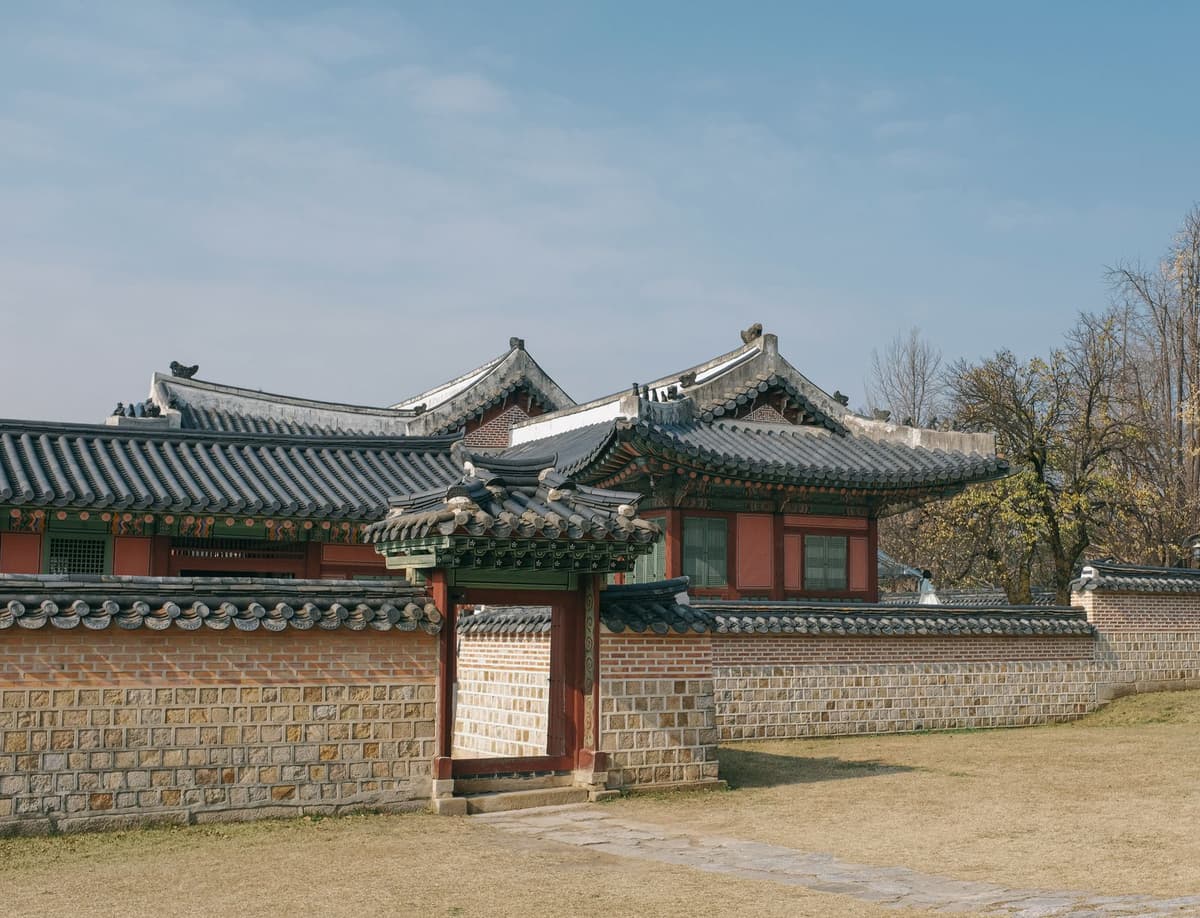
- Gyeongbokgung Palace (경복궁): Snow on the curved rooftops, with Bugaksan mountain behind, is the classic Seoul winter photo. Adult admission was ₩3,000 (about $2.10) at the time of writing, and entry is free if you wear hanbok. The palace is closed on Tuesdays. Gyeongbokgung Station, Line 3.
- Changdeokgung Palace (창덕궁): Usually quieter than Gyeongbokgung and lovely in snow. It's closed on Mondays, and the Secret Garden (후원) needs a separate ticket. Anguk Station, Line 3.
- Bukchon Hanok Village (북촌한옥마을): Snowy tiled rooftops on a slope are hard to beat. Remember that people live here: keep your voice down, and note that parts of the area now limit tourist visiting hours. Follow the posted signs.
- Namsan trails: The walking paths around Namsan turn into a snowy forest with city views. Stick to the main paved routes, because side trails get icy.
- Your own campus or neighborhood park: Honestly, some of the best first-snow moments are close to home. Many university campuses in Seoul look beautiful under fresh snow, and you won't be fighting crowds for a photo.
Practical Tips for Winter Night Outings
- Dress for standing still. Walking keeps you warm, but waiting in line or taking photos doesn't. Wear layers and carry disposable heat packs, hatpaek (핫팩), which you can buy at any convenience store.
- Go on a weeknight. Weekends close to Christmas get packed at every popular spot. In Korea, Christmas Eve is mostly a couples' holiday, so restaurants near the light displays fill up early. Book ahead or eat before you go.
- Check your last train. Last subway times differ by line and direction. Look them up in Naver Map or KakaoMap before heading out. Late-night N buses can get you home if you miss it. The basic subway fare is around ₩1,550 (about $1.10) with a T-money card; check the current fare, as it gets adjusted from time to time.
- Bring a power bank. Phone batteries drain much faster in the cold, and you'll be using your camera and maps all night.
- Watch for ice. Seoul has a lot of hills, and shaded sidewalks stay icy after snow. Wear shoes with grip. You may see yellow de-icing boxes, jeseolham (제설함), on slopes; they hold sand or de-icer for public use.
- Eat street snacks. Winter is the season for hotteok (호떡), bungeoppang (붕어빵), and roasted sweet potatoes, usually just a few thousand won. Carry some cash, since not every stall takes cards.
- Stay crowd-aware. At big festivals, follow staff directions and one-way walking routes. In an emergency, call 112 for police or 119 for fire and ambulance.
Where you live makes a big difference to how often you'll actually go out. If you're a short walk from a subway line that runs to Gwanghwamun, Jamsil, or Yeouido, a spontaneous "let's go see the lights" evening is easy. If you're still choosing a place, compare neighborhoods and subway access on our listings map before you sign.
Looking for a warm place to come home to this winter? Find a home near the subway lines that'll get you to Seoul's best winter lights.